Socrates

"The only true wisdom is in knowing you know nothing." 

Socrates

"To find yourself, think for yourself."

Nelson Mandela

"Education is the most powerful weapon which you can use to change the world."

Jim Rohn

"Success is nothing more than a few simple disciplines, practiced every day." 

Buddha

"The mind is everything. What you think, you become." 

Wednesday, 21 March 2018

Kani Tribal


Monday, 19 March 2018

SKILLS FOR EMPLOYABILITY


-Soft Skill-

Regarding Assignment 


1.      Coping with Fear-
What are the fears affected You?
2.       Coping with failure-
Differentiate Success and Failure?
3.       Coping with Depression-
What is the reason for Depression?
4.       Team Work-
How to help team work get your success?
5.       Leadership-
What is the meaning of leadership?
6.       Attitudinal Change-
How the attitudes help us to reach our goal?
7.       Emotional intelligence-
What are the steps to emotional intelligence ?
8.       Group Discussion-
How do we participate in Group discussion?
9.       Interview Skills –
What the needed skills are for attend an interview?
10.   Career Guidance-
What is the importance of Career guidance?
What is the difference between careers& Job?

Watch Movie 

The Pursuit of Happyness  Submit the review

Read the book : Rich Dad &Poor Dad: The theme of  story notable quotes, inspiring incidents
Write an article 

Assignment submission deadline March 28,2018.

You are requested to submit the assignment before the due date


Saturday, 17 March 2018

MCLUHAN'S CONCEPT OF "MEDIA"- MEDIUM THEORY

MCLUHAN'S CONCEPT OF "MEDIA"

McLuhan's approach is new and ingenious. It is rich of enlightenment for the understanding of the development of new media especially online games. It helps to understand the virtualization of people's cultural life nowadaysit helps to understand the entertainment and games of the contemporary media. 


THE MEDIUM AFFECTS THE SOCIETY.

McLuhan observes that any medium "amplifies or accelerates existing processes",  "change of scale or pace or shape or pattern into human association, affairs, and action", More controversially,   suggested that content had little effect on society the effect of media is considerable  McLuhan pointed to the light bulb as an example.   A light bulb does not have content in the way that a newspaper has articles or a television has programs. Yet it is a medium that has a social effect; that is, a light bulb enables people to create spaces during night-time .
McLuhan says that we are fail in  studying media, because we pay attention to and focus on the content, which blinds them to see its actual character, the psychic and social effects.
Impact on a society is not linear and static, but multi-dimensional and dynamic as that medium interacts with other media and as the society changes how it uses the  medium.

Content is medium

McLuhan also says that a CHARACTERISTIC OF EVERY MEDIUM is that its content is always another medium.The impact of each medium is somewhat limited to the previous social condition,since it just adds itself to the existing, amplifying existing processes. Therefore, different societies may be differently transformed by the same media.

Hot or Cool Media

McLuhan also stated that different media invite different degrees of participation on the part of a person who chooses to consume a medium.
Some media, such  A movie is thus said by McLuhan to be "hot", intensifying one single sense "high definition", demanding a viewer's attention, enhance one single sense .  "Any hot medium allows of less participation than a cool one.  Hot media  are usually sequential, linear and logical. They emphasize one sense over the others. For this reason, hot media also include 
radio, as well as film, the lecture and photography
Cool media, on the other hand, they require more active participation on the part of the user, including the perception of abstract patterning and simultaneous comprehension of all parts.  Therefore, according to McLuhan cool media include 
television, as well as the seminar and cartoons.
Hot Medium

  • extends single sense in high definition
  • low in audience participation
  • engenders specialization/fragmentation
  • uniform, mechanical, extends space
  • horizontally repetitive

Cool Medium

  • low definition (less data)
  • high in audience participation
  • engenders holistic patterns
  • tribalizes
  • creates vertical associations


MEDIA--THE EXTENSION OF MAN/  OURSELVES

McLuhan thinks that game is also a media; it is the extension of man and society.
The core of McLuhan’s theory, and the key idea to start with in explaining him, is his definition of media as extensions of ourselves.  Any extension, whether of skin, hand, or foot, affects the whole psychic and social complex.
In McLuhan’s theory language too is a medium or technology because it is an extension, or offering, of our inner thoughts, ideas, and feelings—that is, an extension of inner consciousness.
Thus, spoken language is the key development in the evolution of human consciousness and culture and the medium from which subsequent technological extensions have evolved.Thus,  make us aware of the implications of the evolution toward the extension of collective human consciousness facilitated by electronic media.

Media can “heat up” over time

Writing in the 1960s McLuhan described television as a cool medium, but one could argue that television has “heated up” since then as it has become more high definition and more omnipresent. We do not use television today in the same way we used it in the 1950s and 1960s, when families frequently sat around the television watching one show at a time. Now we have multiple televisions and other types of screens (such as personal computers, laptops, cell phones, tablet computers) of multiple sizes in multiple locations (including on our person) that are available continuously to provide a stream of images, text, and other information that we often attend to in a fragmentary and desultory manner. Therefore the experience and effect of using electronic screen technology has heated up over time.

 Global village

Electronic media create the “global village”, transforming us into people who are complex, depth-structured and emotionally aware of our interdependence with all of human society .

MEDIUM THEORY


During the 1960’s and 1970’s, a Canadian literary scholar, Marshall McLuhan, who had a profound understanding of electronic media and its impact on both popular culture and society. It is a analytical theory.

It analysis of media characteristics and the historical analysis of human perception.

 Popular media content includes television programming specially includes television programming are appear on the surface.  Multiple levels of meaning are often present and sophisticated content itself is ambiguous (vague meaning to their content). They will have a better chance to appealing to different audience. George Gerber distinguished media by the cognitive process each required. He stressed how channels differ not only in terms of their  content but also in regarded to how they awaken and alter thoughts and senses.


Medium theory focused on the medium characterization itself rather than on what it conveys or how information is received. In medium theory a medium is not only a news paper, Television, or the digital camera and so forth.  Rather it is the symbolic environment of any communicative act.  For instance the internet or blogs.

Assumption and declaration of McLuhan Theory regarding medium:

1.Changes in communication technology inevitably produce profound changes in both culture and society orders. 

2.McLuhan argued that technology inevitably cause specific changes in how people think, in how society is structured.

3.McLuhan proclaimed that the medium is the massage. In other words, new forms of media transform our experience of ourselves and our society. The medium is message. We live in message.  The content of new medium is  as old medium. This influence of new forms of media(TV, Internet) is ultimately more important than the content that is transmitted in its specific messages.

4. He suggested the term “global village”. It refers to the new form of social organization that would inevitably emerge electronic media tied the entire world into one great social, political and cultural system.

5. McLuhan proclaimed media to be the extension of the man. He argued that media quite literally extended sight, hearing and touch through time and space

Criticism:

McLuhan work became more accepted within the media industries. It aroused increasing criticism with in academia. The critics is found that his ideas to diverse and inconsistent.


it also have a opinion that, this thinking was no meaning no linear and logically inconsistent and random thoughts only.


His ideas were overly speculative and empirically unverifiable cultivation analysis.


Sunday, 25 February 2018

SOCIAL MEDIA THEORIES

Social media
These are websites and computer programs that allow people to communicate and share information on the internet using a computer or mobile phone.  Now social media is consider as one of the hottest areas of interpersonal communication research; such as  how technology is influencing our interpersonal communication and how our interpersonal communication is influencing the development of technologies. 

Our interpersonal relationships has been changed lot by Technology . Computer Mediated Communication (CMC) is  altering the norms of interpersonal interaction and creating a new system of messages by which people attempt to understand one another both verbally and nonverbally.


According to Mcluhan , technology refers to human inventions that enhance communication. The new technologies like alphabets, printing press, electronic media and now digital communication have effect on man’s cognition and social organization which in turn affect the culture of any society. 

SOCIAL EXCHANGE THEORY
Social exchange theory defined by sociologist, George Homans . Social exchange as the exchange of activity, tangible or intangible, and more or less rewarding or costly, between at least two persons.Social exchange theory is  influenced by a social psychological and sociological perspective. Social exchange theory has been generally analyzed by comparing human interactions with the marketplace. 
Social exchange theory have some key concept; they are  include reciprocity, fairness and negotiated rules, with information, approval, respect, power, group gain and personal satisfaction among the rewards in successful transactions.”

Social exchange theory views exchange as a social behavior that may result in both economic and social outcomes.

Online social networking is an ideal application of social networking theory. Researchers  find that positive social influence to use an online community increases online community self-disclosure; reciprocity increases self-disclosure; online community trust increases self-disclosure; and privacy risk beliefs decrease self-disclosure. 

THE SOCIAL PENETRATION THEORY
The theory was formulated by psychologists Irwin Altman and Dalmas Taylor in 1973 to understand relationship development between individuals.  It is also called the “onion theory” of personality, since “layers” of personality are penetrated as time passes and intimacy grows. Social penetration theory was developed to explain the evolution of interpersonal relationships. 
The social penetration theory states that the relationship development occurs primarily through self-disclosure, or intentionally revealing personal information such as personal motives or desires, feelings, thoughts, and experiences to others. This theory is also guided by the assumptions that relationship development is systematic and predictable. Self-disclosure is the major way to bring a relationship to a new level of intimacy.
The Social Penetration Theory explain the relationships, which is become more intimate over a period of time. The maintaining relationship determine the people’s willing to reveal their more personal information; For ex FB relationships. Millions of friendships have formed from a friend request. A person may start to follow you, but constant and direct interaction will lead to more intimate friendships that go beyond the computer or cell phone.  Maintaining relationships also relies on intimate exchanges by both parties.
The process of self-revelation is influenced by three major factors, which are:  personal characteristics, reward-cost assessments, and the situational context. 
The social penetration theory (SPT) proposes that, as relationships develop,  from relatively shallow, non-intimate levels to deeper, more intimate ones. 

THE STRONG AND WEAK TIES THEORY 
The Strong and  Weak tie theory derives by Nick Granovetter .

The Strong and Weak Ties Theory says  that people relationship levels depends on time, emotional intensity, intimacy and reciprocal service. The weaker connections also serve an important purpose, they help you connect to another part of the world that we  may not be aware of.

When Granovetter talks about ties in social networks, he defines a strong tie as being your close friend and a weak tie as your remote friend. An average Facebook user, who has no experience with social network theory or has never heard of Granovetters theory,

The individuals with few weak ties will be deprived of information from distant parts of the social system and will be confined to the provincial news and views of their close friends. This deprivation will not only insulate them from the latest ideas and fashions but may put them in a disadvantaged position in the labour market, where advancement can depend,
MEDIA RICHNESS THEORY, OR  INFORMATION RICHNESS THEORY OR MRT,
This theory was  introduced by Richard L. Daft and Robert H. Lengel in 1986 . This is consider as an extension of information processing theory.

 MRT is used to rank and evaluate the richness of certain communication media, such as phone calls, video conferencing, and email. Media Richness Theory provides a framework for describing a communication medium's ability to reproduce the information sent over it without loss or distortion. For example, a phone call cannot reproduce visual social cues  while video conferencing, which affords the transmission of gestures and body language. MRT explains that richer, personal communication mediums are generally more effective for communicating of equivocal issues than less rich media.

Media richness theory states that all communication media vary in their ability to enable users to communicate and to change understanding. The degree of this ability is known as a medium's "richness."
Media richness depends on
  • Ability to handle multiple information cues simultaneously
  • Ability to facilitate rapid feedback
  • Ability to establish a personal focus
  • Ability to utilize natural language


Tuesday, 2 January 2018

How can color tell a story? Color Theory

As filmmakers, they must use mood-boards who   showcase color palette ideas  maximize emotional and visual effect using color sense. Cinematography is such an important part of the filmmaking process. Filmmakers have an even bigger challenge because  cameras move,  the colors in backgrounds and foregrounds will always be changing.Color in film can build harmony or tension within a scene. When telling a story, colors can; Color is often an extremely powerful tool communicate emotional ideas to the audience. Color can affect audience emotionally, psychologically and even physically.  

  1. Elicit psychological reactions with the audience
  2. Draw focus to significant details
  3. Set the tone of the movie
  4. Represent character traits and more
  5. Show changes or arcs in the story
Filmmakers are both artists and craftsmen, who  explains the power of color and how successful filmmakers use it to give meaning and impact to their stories. and use as a device to tell the story.

Film makes better use of color as a storytelling tool than even Gladiator. Cinema storytelling that we should never neglect it.  

Neither Color Strategy Is Correct Over The Other, But It Is Easy To Both See And Feel That The Response From The Viewer Will Be Much Different When They Look At Each Image.

film color

Analogous colors are colors that are next to each other on the color wheel. These colors, when they appear together, provide a smooth and continuous tone. Colors that are located opposite to one another on the color wheel are complementary colors. When complementary colors appear next to each other they provide more of a dramatic and high contrast look.

Yellow Dick Tracy
dick-tracy-use-of-colour-in-cinema-e1448309818276.jpg
Yellow is the colour of caution, it brings power, energy and anxiety. Dick Tracy wears a bright yellow coat and hat, the screen becomes energised whenever Tracy enters. The color is brash, daring, it is the color of obsession , there is a reason poisonous reptiles have yellow skin. Tracy is the obsessive detective caught up in his case . 


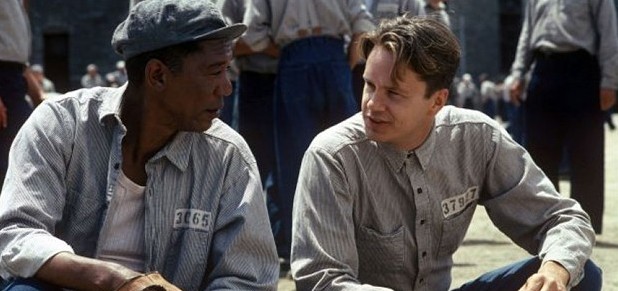
 Blue Shawshank Redemption
Blue can be a tranquil pond or a soft blanket of sadness. Throughout Shawshank the film is surrounded by the color of blue. A smog of grey blue surrounds the film. Shawshank is a film of sadness, and is this emotion that cinematographer Roger Deakins wanted the audience to feel throughout the film. That we are amongst the prisons. When Andy escapes the prison he finds his friend Red on an island, with vibrant green land – the first time vivid colours have been used throughout the film.  

Orange The Godfather

Orange is the welcoming color, warm sunsets and Halloween pumpkins.  In the opening scene of The Godfather the Don’s office is lit with an amber and orange light. The film is lit romantically with pastel orange shades. Throughout the film the orange shades turn more red as more is revealed within the crime underworld. 

 Green Crouching Tiger Hidden Dragon

Green can signal health, danger or decay. It is the colour of fresh vegetables and spoiled meat. In Crouching Tiger Hidden Dragon Jen and her master Li Mu Bai are about to have a fight in a green vibrant bamboo forest. The fight is non-violent Jen’s master is afraid that Jen is turning evil, he chases her through the forest, she disappears diving into a green lake. The oppositional nature of green plays a significant part in the story. 

6. Purple Chicago

Purple the colour of mystery, the paranormal and death.In Chicago purple is used to show both death and delusion. Roxy stands on stage she looks out into the crowd purple light covers her and the piano player. Roxy is imagining that she is a famous singer, the story is about the glamorization of criminals. Purple is consistent throughout the deaths that take place in the film.
Color psychology, is defined as the study of hues as a determinant of human behavior.
Colors evoke emotion in our brains. It’s been proven time and time again that hues of blue are most often associated with cool, calm feelings, while stronger colors like red stir up strong, aggressive emotions.
It’s these underlying perceptions that help photographers and cinematographers alike bring about a certain feel and aesthetic to a particular image, be it still or motion.

In the four-minute montage, Mtz-Seara explores vimeo.com  innocence, passion, insecurity, sociability, madness, eroticism, and more as the colorful video transitions from one masterful scene to another.
From David Fincher’s Fight Club to Wes Anderson’s The Grand Budapest Hotel, the video shows how clever use of colors and composition subconsciously evoke emotions as the respective directors and cinematographers create and capture the scenes of a film. 
Example of Analogous Colors
filmmaking color
Example of Complementary Colors
cinematography colors
This is how you color simplify an image. You simply limit the assortment of colors that make it into your footage which allows you to control both the mood and tone of the scene as well as provide color symbolism.
To help enhance color simplicity you might also want to play around with color balance and color highlights. Look at the following photograph for example. Notice the image is predominately cool (blue) with only a warm (orange) highlight. Playing with color highlights is a great way to add interesting color components to your film footage.
filmmaking color highligh
If you’re a filmmaker, understanding color, color theory, color psychology, color simplicity and color balance is a must in order to be able to effectively set the tone of your scene as well as isolate your main areas of interest. Distracting colors, just as much as distracting objects, add unnecessary visual confusion and clutter to a scene. By simplifying your colors you help isolate the more important areas of your footage.cinematography-color-simplicity

RED – anger, passion, rage, desire, excitement, energy, speed, strength, power, heat, love, aggression, danger, fire, blood, war, violence

PINK – love, innocence, healthy, happy, content, romantic, charming, playfulness, soft, delicate, feminine

YELLOW – wisdom, knowledge, relaxation, joy, happiness, optimism, idealism, imagination, hope, sunshine, summer, dishonesty, cowardice, betrayal, jealousy, covetousness, deceit, illness, hazard

ORANGE – humor, energy, balance, warmth, enthusiasm, vibrant, expansive, flamboyant

GREEN – healing, soothing, perseverance, tenacity, self-awareness, proud, unchanging nature, environment, healthy, good luck, renewal, youth, vigour, spring, generosity, fertility, jealousy, inexperience, envy

BLUE – faith, spirituality, contentment, loyalty, fulfillment peace, tranquility, calm, stability, harmony, unity, trust, truth, confidence, conservatism, security, cleanliness, order, sky, water, cold, technology, depression

PURPLE/VIOLET – erotic, royalty, nobility, spirituality, ceremony, mysterious, transformation, wisdom, enlightenment, cruelty, arrogance, mourning, power, sensitive, intimacy

BROWN – materialistic, sensation, earth, home, outdoors, reliability, comfort, endurance, stability, simplicity

BLACK – No, power, sexuality, sophistication, formality, elegance, wealth, mystery, fear, anonymity, unhappiness, depth, style, evil, sadness, remorse, anger

WHITE – Yes, protection, love, reverence, purity, simplicity, cleanliness, peace, humility, precision, innocence, youth, birth, winter, snow, good, sterility, marriage (Western cultures), death (Eastern cultures), cold, clinical, sterile

SILVER – riches, glamorous, distinguished, earthy, natural, sleek, elegant, high-tech

GOLD – precious, riches, extravagance. warm, wealth, prosperity, grandeur