Socrates

"The only true wisdom is in knowing you know nothing." 

Socrates

"To find yourself, think for yourself."

Nelson Mandela

"Education is the most powerful weapon which you can use to change the world."

Jim Rohn

"Success is nothing more than a few simple disciplines, practiced every day." 

Buddha

"The mind is everything. What you think, you become." 

Showing posts with label Writing for media. Show all posts

Monday, 20 February 2023

WRITING A NEWS STORY

  News is an update on the happening around us. As the terms suggests News is any newpiece of information. It can be the details on a current event, on going projects or it can be on future projects. 

A newspaper publishes the back ground information, analyses and criticizes the details to interpret it for the society. There is something called “news worthiness”. There are several factors that decide the news worthiness of news. 

They are 

1. RELEVANCE How important is the news for the audience is an important question. An event of Canada might be irrelevant news for an Indian who would prefer a more local news. The news should be of a current issue. 

2. TIMELINESS : Recent event or upcoming events are likely to be news. 

3. IMPORTANCE, IMPACT OR CONSEQUENCE. How important is the news to the reader. Issues of social concern come under this category.

 4. PROMINENCE : The news of public figures are likely to be of interest than non-public figures. 

5. PREDICTABILITY : Certain events like elections, major sporting events, award announcements, legal decisions etc are predictable.

 6. UNEXPECTEDNESS : Events like natural disasters, accidents or crimes are completely unpredictable. 

7. CONTINUITY : Some events like wars, elections, protests and strikes require continuing coverage. These events are likely to remain news for along time. 

8. HUMAN INTEREST STORIES: Editors should know the response of the audience. The editor should select high interest stories to balance out other hard hitting investigating stories. 

9.` NEGATIVITY : The news should make an impact on the reader. So there is a normal trend of publishing negative news. 

10. THE UNUSUAL : Strange and unusual stories are likely to receive reader’s interest. Readers expect their newspapers to be accurate sources of information. A straight news story is supposed to be objective and fair. The news story has a structure. It has an inverted pyramid structure. The news story has a particular writing style. The summary of the news is the introductory paragraph. The details are given in the body of the news and the story is concluded with minor details. Every news story has a Headline. 

HEADLINE. There should be a simple and direct headline that can attract the reader. The head line usually has a logical sentence structure, written in an active voice in the present tense of the verb. 

 The Lead : The lead or opening paragraph is the most important part of a news story. It is the first paragraph of a news story. It gives the reader important details and the summary of the news. There are several ways to write a lead. 

1. The Five W s’ and “H” :- the lead should explain the what, why, when, which, where and how of things. 

2. Specificity : Try to give specific details about the news. 

3. Brevity : Readers should be told why a news is important and in few words as possible. Avoid unintentional redundancy. Go right to the heart of the story. 

4. Active Sentences : Use active sentences to make the lead lively.

 5. Honesty : The lead should be a honest portrayal of the story.

BOOK REVIEWS

 Newspapers usually have a panel of specialists who write book reviews. The reviewer must have in depth knowledge of the subject and should be able to assess the book in terms of its impact on the reader

The main task of the reviewer is to report of the content, the approach and the scope of the work for the benefit of the readers. The book review should contain a brief description of the book and a short account of the author. The book review should tell the reader whether a book is worth reading and the review should be unbiased. An ideal review should give an overview of the book to the readers and an evaluation based on the readers taste and experience. 

The opening paragraph of the Book review should grab audience attention. The passage can be conversational in tone. 

It can be slightly provocative to compel the reader to read. The body of the review is a series of short paragraphs on the book and author. 


The total review should be 500 to 1,000 words. 

Full bibliographic details of the work should be included like 

(a) Title and Sub Title. 

(b) Place of publication

 (c) Publisher

 (d) Date of publication

 (e) Number of pages 

(f) The ISBN Number

source 

Sunday, 19 February 2023

ARTICLE WRITING


 Article analyses, interprets and provides arguments for and against an idea. 

The Article provides back ground information, present an update condition and goes on to predict the future.

 Articles usually provide some important information, interpret a trend, analyze the situation and predict the future of a particular issue

Accuracy and consistency are needed because credibility is the prime quality of an Article.  


An Article 

  1. Gives information 
  2. Interpret a recent trend
  3. Analyze a current situation 
  4. Attempt to predict the future of a particular issue.


STRUCTURE OF AN ARTICLE 

An article should have headline, 

    • introduction, 
    • body and
    • conclusion


HEADLINE : The headline should be attractive and should clearly state the topic of discussion. 

INTRODUCTION : the Introduction is the Lead paragraph presenting the topic. 

BODY : The Body of the article analyses and interprets the topic. 

CONCLUSION : The conclusion of the article can be a summing up or a prediction of the future of the topic

Wednesday, 11 May 2022

Short story writing


Starting to write short fiction

The short story is a form of literature in its own right, and is loved because

 it is able to strike directly into the heart and mind without preamble. A short story is a short, self-contained work of fiction that generally falls between 1,000 and 10,000 words. 

 The compulsion to tell stories is a very powerful and ancient one which continues to have a place in our modern culture.

Short stories demonstrate how diverse, funny, sad, illogical, cruel, rapturous, shocking and mysterious the human experience can be.

It is often said that a short story should provide a snapshot of a moment of illumination.


 Short stories typically contain between 1,000 and 10,000 words. Stories longer than 10,000 (but shorter than 40,000) words are generally considered novellas. You might even come across the term novelette to refer to a story between 7,500 and 17,000 words. Once you hit about 50,000 words, you’re in novel territory .

What’s in a short story?

Every short story has these five elements:

·                     Character

·                     Plot

·                     Theme

·                     Conflict

·                     Setting

Characters are the people or animals, aliens, mythical creatures, or sentient objects who do the action in your story. Your protagonist is the character who undergoes some kind of change or lack thereof as a result of the story’s main conflict.

Your antagonist is the character or something abstract attempting to prevent the protagonist’s change.

To clarify, the antagonist doesn’t have to be a person—

1.      it could be the protagonist’s environment,

2.    their society, or

3.    even an aspect of themselves. 

Plot is the series of events that illustrate the story’s conflict.,

A short story’s theme is its central message. This is the point the author wants readers to take away from their work. 

Conflict is the action that drives the story’s plot. It’s the obstacle the protagonist has to overcome or the goal they’re attempting to reach.

 A conflict can be internal, like to prove to herself .

 it can be external, like the protagonist striving to prove to her society

Setting is the time and place where a story’s action occurs. For example, our alien story’s setting might be Nevada in 1955. 

How to write a short story

Mine your imagination

Just like every other type of writing, a short story starts with brainstorming. I

Start your brainstorming session with the elements you already have, then flesh out your story idea from there.

 Write down your setting,

your characters,

 the conflict they face,

 and any key plot points you have in mind.

 Without a conflict, you don’t have a story. Although all of the five elements listed above are necessary for writing a great short story, conflict is the one that drives your plot, shapes your characters, and enables you to express your theme. 


The next step in writing short fiction is outlining your story. 

When you outline your story, you organize the notes from your brainstorming session into a coherent skeleton of your finished story.

Outlining your story is a key part of prewriting because it’s where you develop your story’s framework and sketch out how each scene follows the previous scene to advance the plot.

This stage is where you determine any plot twists or big reveals and fit them into the story’s sequence. 

·                     Keep the ending in mind.

·                     Listen to how people speak.   Then, write dialogue that sounds like real conversations. These conversations won’t necessarily be grammatically correct, but they will make your characters sound the way people naturally speak.

Once you have a finished first draft, let it rest. If you have the luxury of waiting a day or so to come back and read what you wrote, do that. That way, you can read your writing again with fresh eyes, which makes it easier to spot inconsistencies and plot holes. 


Then it’s time to edit. Read your writing again and note any places where you can make the writing more descriptive, more concise, more engaging, or simply more logical. At this stage, it can be very helpful to work with readers’ feedback. If you’re comfortable sharing your work and receiving constructive criticism, share your rough draft with friends and family—and, if possible, with other writers—and let their feedback guide the revisions you make.  

Friday, 29 April 2022

EDITORIAL WRITING

http://14.139.185.6/website/SDE/sde67.pdf 

Editorials or leaders as they are often called are an essential and most important part of a newspaper or journal..Editorial can be called the conscience of a newspaper or the mirror of its opinions. It can also be called the voice of a newspaper. It is a well- studied and carefully structured composition in a sober style with a serious approach on a significant issue.


Legendary editors Frank Mores said that in a democracy when the opposition is weak it is the job of the press to act as a strong opposition to the ruling party. While critically examining government policy and performance, editorials act as principal spokesperson of the opposition.


It provides the newspaper to present its policies, views, perspectives and stand points regarding many burning current issues. It should be very objective, unbiased, expertise and logical point of view. It tries to influence public opinion so as to make its readers to subscribe to its own perspective. It informs as well as calls in to action.


Brief History of Editorial

Writing Editorials are the content component of a journal. In fact, the most intimate form of writing for communication is expression of a communicator’s personal views or opinion on a subject, the communicator thinks to be of general interest. Viewed in this framework, the editorial writing started when someone thought of conveying the views he/she thought must be shared with everyone who is a member of our information society.

Editorials  meaning

Editorials are basically expression of opinion by an individual or a small group which is viewed as being important for the people by and large. Editorials are not orders, announcements and general instructions or suggestions. The opinions and views contained in an editorial set the tone of public discourse in a democratic set up. Editorials are vox populi.


Evolution of Editorial 

Newspapers were initially launched to express opinions of the persons who brought them out. All initial newspapers in India, Hickey’s Bengal Gazette (1780) to Raja Ram Mohan Roy’s Sambad Kaumudi (1821) or Mirat- ul- Akhbar (1822) were meant to express strongly held beliefs and views of their promoters. This trend continued till the Times of India (1838), The Statesman (1875) and The Pioneer (1864-65), all inspired by the British newspaper industry, appeared in India and gave new professional dimension to print media. 

  1. Editorials can be broadly classified as 
  2. Interpretative editorials . 
  3. Action-oriented editorials 
  4. Critical editorial  and
  5. Humorous editorial 

Any government, especially a democratic government that has to face masses in elections to return to power has to know the public mind well to be able to formulate its policies that appeal to the masses


Contents of editorials differ from journal to journal

THE STRUCTURE OF AN EDITORIAL

 All Editorials also have: an introduction, body and conclusion like any other media writing. a simple explanation of the issue, especially so if the issue is complex and needs elaboration to be understood by lay reader. an inviting new angle to attract readers. all good editorials talk and discuss issues and not personalities and they also refrain from name-calling. a good editorial should take a pro-active approach to be of constructive criticism and contain positive suggestions. a good conclusion that satisfies the readers by adding to their knowledge and understanding of the subject. 7.3.2 Journals and Editorials We can broadly divide all journals on the An editorial consists of

  1.  a headline, 
  2.  introduction of the topic,
  3.  a body of serious critical analysis and 
  4. a powerful conclusion. 
Features of an Editorial 

Editor generally look for the following things when writing an editorial: that the topic chosen for editorial is current and timely, and it is linked to some recent development of importance; and common interest. 95 that the editorial meets the concerns of readers and is relevant to them. the topic of the editorial has relevance in catchment area of the publication (where the newspaper or journal is circulated and read). that the editorial piece is small and generally not more than 500 words; and that it is clearly written and has simple and grammatically correct language.


Language of an Editorial

 The language of an editorial has to be simple, straight and sober. It should be such as to go straight to the point and leave no ambiguity in the mind of the reader. It should have force and flow but should be decent and uninvolved. There is no place for slangs and outdated expression in it. It should be impressive without being boisterous. However, in campaign journalism the norms about language are not observed. Journals brought out by political parties often attack the political opponents of their party in language which is aggressive, indecent and even defamatory. That is the reason you must be wary of words while writing or expressing yourself in media. Advocacy journalism is also making its appearance felt in Indian media world. While propagating their viewpoint, journalists often use language which is loud and less than decent. However, use of simple, sober and non-aggressive language is the best as it leaves a lasting impression on the minds of the readers.

TYPES OF EDITORIALS
Editorials can broadly be categorized into the following:
1] Appreciative: These editorials admire people and organizations for something done well. They are not common as the traditional role of media in our democratic set-up is critical appraisal of some development and not to give commendation certifications. 

2] Critical: These editorials constructively criticize actions, decisions or situations while providing solutions to the issues under discussion. The Immediate purpose there editorials is to get readers to see and be aware of the problem before country or society. 

3] Interpretative: Editors often use such editorials to explain the way their newspaper thinks about how a sensitive or controversial subject should be handled by the authorities concerned or stake-holders. 

4] Persuasive: Editorials of persuasion aim to give their readers a positive frame of mind so that they are encouraged to take a specific, positive view. 

5] Campaign Editorials: Such editorials are mostly written in journals of political parties, religious organizations or in government publications in support of some programmes of larger social good like pulse polio drive etc. 

6] Advocacy Editorials: Such editorials are often found in the publications of NGOs and other voluntary organizations in subject of the cause they work for. NGOs often work for poor and disadvantaged sections of society like Editorial Writing 96 
Analytical Writing unorganized labor, poor women and children, and physically challenged people. Editorials in their publications seek support for work for such people. 

7] Academic and Philosophic Editorials: Such editorials are written in academic journals and journals brought out by religious and spirituals organizations. 

8] Satirical Editorials: Often the third editorial in some newspapers especially the Times of India, is a satire. The idea is to give some comic relief to the mind of a reader who is tired of reading heavy stuff on the editorial page. There are some journals based on satire. 


PREPARING TO WRITE AN EDITORIAL 
For writing an editorial, you need to move in a definite direction and take the following steps: You should not start writing before you know what you are aiming at otherwise you will confuses your readers who will not know what they are supposed to do with your message. You must make up your mind. This will guide you about what you want to convey and how you say it through your writing. 

Select a Topic 
The topic you choose is the most important part of writing an editorial for your journal. The best topics are those pertaining to current issues, which are in public domain. Since everyone is interested in such issues, your editorial piece will get instant readership. 


Firm up Your Approach 
As a media person, you have your own views and opinion on important matters in public discourse. Besides your opinion on the policy of your organization on a topic of current interest also matters. Therefore, have a definite policy line on the issue.


Do Basic Work

 First of all think of a good but small two-three word headline that will attracts a reader’s attention and motivate him/her to read your editorial. While writing a good editorial you must have necessary facts, figures and even quotes of knowledgeable people in support of your line of argument. Moreover, you should use data to prove your line of argument. Steadily develop your case in support of your editorial line so that the strongest argument comes in the end and convinces the reader. 

Keep Deadline in Mind 

In media, you are always racing against time. Deadlines are important. While writing editorial that you should always keep deadline in mind. Since we are not supposed to leave any mistake in an editorial, it is revised again and again and this takes time. 


HOW TO WRITE AN EDITORIAL 

The following is a 10-point recipe for you to write an editorial:
 1) The Theme / Subject: Present your views briefly but unequivocally using fact and figures where necessary. 
2) The Presentation: Talk about the issue clearly and say why it is important. 
3) The Approach: Look rational. Discuss the opposite viewpoint as well. 
4) The Language: Use key words again and again for the readers to understand it well. 
5) The Thrust: Encourage critical thinking and pro-active reaction.
 6) The Wordage: Restrict it to 500 words. 
7) The Style: Never use “I” in an editorial even if you are the boss of newspaper or periodical. 
8) Revision: Once done you have to do two things – first revise it and then edit it. Revising should be done to ensure that your editorial is giving the message which you wanted to give to your readers. You can still think of a change in the basic argument put forth by you. Think if it is needed. While revising the draft of your editorial you have to ask yourself the follo

In haste: On vaccinating children against COVID-19

The emergency use authorisation (EUA) granted on April 26 to two COVID-19 vaccines — Corbevax for children 5-11 years, and Covaxin for children 6-11 years — is one more instance where the Indian drug regulator has acted in haste. Even if the EUA granted to Covaxin in January 2021 despite no safety and efficacy data of the phase-3 trial is condoned as a desperate measure in ensuring greater vaccine availability, the regulator clearly has no fig leaf to defend the greenlighting of the vaccines for children at this stage. Evidence from across the world after the deadly Delta variant and the extremely transmissive Omicron variant has shown that unlike adults, children in general, and little children in particular, do not suffer from severe disease. The ICMR’s fourth seroprevalence survey (June-July 2021) soon after the second wave peaked nationally found that 57.2% of children (6-9 years) and 61.6% of children (10-17 years) were infected by SARS-CoV-2 virus; seroprevalence among adults was 66.7%. Since vaccination of adolescents began only in early January 2022, the antibodies detected in children in mid-2021 were only from infection by the virus. The extremely infectious Omicron variant would have infected an even larger percentage of children. Yet, the number of severe cases and deaths in children 5-11 years has been very low. True, with schools reopening, children could be at greater risk of contracting infection. But with natural infection found to offer protection across age groups, India could have waited for validation of the available evidence on the vaccines for children.

Unlike in January 2021 when approving vaccines for adults as soon as possible was the highest priority, and hence the EUA based on fewer cases and short follow-ups was seen as a necessity, the situation is not the same now, especially in the case of children as young as five. Hence, the regulator’s urgency to greenlight vaccines for children under the EUA route is highly questionable. Clinical trial data of Corbevax for children 5-12 years were posted as a preprint, which is yet to be peer-reviewed, on the day approval was granted; trial data of Covaxin for children 2-18 years were posted as a preprint in December 2021. The Health Ministry had already set a precedent last month by clearing Corbevax for children 12-14 years without first seeking the approval of the National Technical Advisory Group on Immunisation (NTAGI), which clears vaccines for the national immunisation programme. With NTAGI clearly against approving vaccines for children, there is every likelihood of the expert body being ignored again. Also, Prime Minister Narendra Modi’s message on April 27, a day after the EUA, that every eligible child should be vaccinated at the earliest might prompt the Health Ministry to sidestep the NTAGI once more, thus departing even more from evidence-based policy making.


  1. What is an editorial? 
  2.  How old is editorial writing? When were first editorials written. 
  3. How do you plan to write an editorial? 
  4. How is the content and character of editorials changing? 

Campaign Editorials : Such editorials are mostly written in journals of political parties, religious organizations or in government publications in support of some programmes of larger social good like pulse polio drive. 

vox populi : It is a Latin words. Its direct meaning is ‘Voice of People’. 
Editorial : It presents the opinion of a newspaper on an issue. It reflects the majority view of the editorial board.

பெரும்பாலானவர்களுக்கு அதிருப்தி தந்த பட்ஜெட்!


கடந்த ஆண்டு, ஸ்டாலின் தலைமையிலான தி.மு.க., அரசு பதவியேற்ற நிலையில், இம்மாதம் ௧௯ம் தேதி, தமிழக சட்டசபையில், முழுமையான முதல் பட்ஜெட் தாக்கல் செய்யப்பட்டுள்ளது. இந்த பட்ஜெட்டில் முதன்மையாக இடம் பிடித்துள்ள திட்டம், அரசு பள்ளிகளில் படித்து கல்லுாரிகளில் சேரும் மாணவியருக்கு, அவர்கள், தங்களின் படிப்பை முழுமையாக முடிக்கும் வரை, மாதம், ௧,௦௦௦ ரூபாய் உதவித் தொகை வழங்கப்படும் என்பதாகும்.

அதாவது, தமிழக அரசு செயல்படுத்தி வரும் ஐந்து வகையான திருமண நிதியுதவி திட்டங்களில், தாலிக்கு தங்கம் வழங்கும் மூவலுார் ராமாமிர்தம் திருமண நிதியுதவி திட்டம் மாற்றி அமைக்கப்பட்டு, மாணவியருக்கு உதவித்தொகை வழங்கும் உயர்கல்வி உறுதி திட்டமாக்கப்பட்டு உள்ளது. இதனால், ஒரு திட்டத்திற்காக செலவிடப்பட்டு வந்த தொகை, மற்றொரு திட்டத்திற்கு மாற்றப்பட உள்ளது. அதாவது, பல ஆண்டுகளாக செயல்பாட்டில் இருந்த ஒரு திட்டத்திற்கு ஸ்டாலின் அரசு புதிய பெயர் சூட்டியுள்ளது. அதே நேரத்தில், மூவலுார் ராமாமிர்தம் திட்டத்தில் பயனாளிகளை சரியாக தேர்வு செய்ய முடியவில்லை. அதனால், புதிய திட்டம் அறிவிக்கப்பட்டுள்ளது என்ற நிதித் துறை செயலரின் கருத்து, அரசு நிர்வாக திறனை கேள்விக்குறியாக்கி உள்ளது.

மேலும், ஐ.ஐ.டி., - ஐ.ஐ.எஸ்சி., போன்ற உயர்கல்வி நிறுவனங்களில் சேரும், அரசு பள்ளி மாணவர்களின் கல்வி கட்டணத்தை தமிழக அரசே செலுத்தும். அதாவது, அவர்களின் இளநிலை பட்டப்படிப்புக்கான முழு செலவையும், அரசே ஏற்கும் என்ற அறிவிப்பு வரவேற்கத்தக்கது தான். ஆனாலும், உயர்கல்வி நிறுவனங்களில் சேர, தேசிய அளவில் நடத்தப்படும் தகுதித் தேர்வுகளில், அரசு பள்ளி மாணவர்கள் வெற்றி பெறுவது மிகவும் குறைவாகவே உள்ளது. அரசு பள்ளி மாணவர்களை, அந்தப் போட்டித் தேர்வுகளை எதிர்கொள்ளும் வகையில் தயார்படுத்த வேண்டியது அவசியம். அதற்கான பயிற்சிகளுக்கு ஏற்பாடு செய்ய வேண்டும். இல்லையெனில், மிகக் குறைவான மாணவர்களே பலன் அடையும் சூழ்நிலை உருவாகும். ஏற்கனவே, மருத்துவ படிப்பில் சேர்வதற்கான, 'நீட்' தேர்வில் தமிழகத்திற்கு விலக்கு கோரி வரும் தமிழக அரசு, உயர்கல்வி நிறுவனங்களில் அரசு பள்ளி மாணவர்கள் சேரும் வகையில், சிறப்பான பயிற்சி அளிக்க முன்வருமா என்பது கேள்விக்குறியே. அரசு பள்ளி மாணவர்களுக்கு சிறப்பான பயிற்சி தர முன்வந்தால் மட்டுமே, தனியார் பள்ளிகளில் இருந்து அரசு பள்ளிகளுக்கு மாறும் மாணவர்களின் எண்ணிக்கை அதிகரிக்கும்.

அதே நேரத்தில், பட்ஜெட்டில் மாநிலத்தை முன்னேற்றப் பாதையில் கொண்டு செல்வதற்கான சிறப்புத் திட்டங்கள் ஏதும் இல்லை. அதற்கு, மாநில அரசின் மோசமான நிதி நிலைமை ஒரு காரணமாக இருக்கலாம். மேலும், முந்தைய அ.தி.மு.க., ஆட்சியாளர்கள் மாநிலத்தை கடனில் தள்ளி விட்டதாக, எதிர்க்கட்சியாக இருந்தபோது, தி.மு.க.,வினர் குற்றஞ்சாட்டி வந்தனர். அப்படிப்பட்ட நிலையில், வரும் நிதியாண்டில், ஸ்டாலின் அரசே 90 ஆயிரம் கோடி ரூபாய் கடன் பெற இலக்கு நிர்ணயித்திருப்பது கவலை அளிப்பதாக உள்ளது. இதன் வாயிலாக, மாநிலத்தின் கடன் சுமை, 6.53 லட்சம் கோடி ரூபாயாக உயர உள்ளது. அந்த வகையில், ஒவ்வொரு குடும்பத்தின் தலையிலும், 3 லட்சம் ரூபாய் வரை கடன் சுமை ஏற்றப்பட உள்ளது.

தி.மு.க.,வின் தேர்தல் அறிக்கையில், கல்விக் கடன் தள்ளுபடி, மகளிருக்கு மாதம், 1,000 ரூபாய்உதவித் தொகை, மின் கட்டணத்தை மாதம் ஒரு முறை வசூலித்தல், தனியார் நிறுவனங்களில் தமிழர்களுக்கு மட்டுமே வேலை வழங்க சட்டம் நிறைவேற்றுதல்.அரசு ஊழியர்களின் பெரிய எதிர்பார்ப்பான பழைய ஓய்வூதிய திட்டத்தை மீண்டும் அமல்படுத்துதல், பெட்ரோல், டீசல் விலை குறைக்கப்படும் என, ஏராளமான அறிவிப்புகள் இடம் பெற்றிருந்தன. அவற்றில் பல அறிவிப்புக்களை அமல்படுத்துவது குறித்து பட்ஜெட்டில் தெரிவிக்கப்படும் என மக்கள் எதிர்பார்த்தனர். ஆனால், அது நடக்கவில்லை.

அத்துடன், மின் வாரியத்தின் கடன் சுமையை குறைக்க போதிய திட்டங்கள் அறிவிக்கப்படவில்லை. அரசு போக்குவரத்து கழகங்கள் மற்றும் அவற்றின் தொழிலாளர்கள் பிரச்னைகளை தீர்ப்பதற்கான திட்டங்களும் இடம் பெறவில்லை. சிறு, குழு தொழில்களை மேம்படுத்துவதற்கான, அவற்றுக்கு ஊக்கம் அளிப்பதற்கான திட்டங்களும் பட்ஜெட் உரையில் இல்லை என்பதால், அந்தத் துறையினர் எல்லாம் அதிருப்தி அடைந்துள்ளனர்.

மொத்தத்தில் சில பிரிவினரை திருப்திபடுத்தி, பெரும்பாலானவர்களுக்கு அதிருப்தி ஏற்படுத்திய பட்ஜெட் என்றே, தமிழக பட்ஜெட்டை சொல்லலாம்.


அரசு மருத்துவமனைகளின் தூய்மைப் புரட்சி!


தமிழ்நாட்டில் ஆரம்ப சுகாதார நிலையங்கள் தொடங்கி அரசு மருத்துவக் கல்லூரி மருத்துவமனைகள் வரையில் அனைத்திலும் கடந்த சில நாட்களாக அமைதியாக ஒரு புரட்சி நடந்துகொண்டிருக்கிறது. தலைமைச் செயலாளரின் அறிவுறுத்தலின்படி மருத்துவமனை வளாகங்கள் முழுவதையும் தூய்மைப்படுத்தும் பணிகள் நடந்துகொண்டிருக்கின்றன. மருத்துவமனைகளில் சுகாதாரக் குறைவு காரணமாகத் தொற்றுகள் பரவுவதற்கான வாய்ப்புகளைத் தடுப்பது, அரசு மருத்துவமனைகளுக்குச் சிகிச்சை பெறுவதற்காக வரும் நோயாளிகளின் மனநிறைவை அதிகப்படுத்துவது, அரசு மருத்துவச் சேவைகளின் தோற்றத்தையும் வெளிப்பாட்டையும் அழகியல்ரீதியாக மேம்படுத்துவது ஆகியவை இந்தத் தூய்மை நடவடிக்கைகளின் நோக்கங்களாகும்.

மருத்துவமனையின் கண்காணிப்பாளர் அல்லது மருத்துவ அலுவலர் இந்தப் பணிகளை மேற்பார்வையிடுவார். மருத்துவமனை ஊழியர்களுக்குத் தேவையான பயிற்சிகளையும் வழிகாட்டுதல்களையும் அவர் வழங்குவதோடு, உள்ளாட்சி அமைப்புகளோடும் பொதுப் பணித் துறை, மின்வாரியம் ஆகிய பிற துறைகளுடன் சேர்ந்து, அவர் தூய்மைப் பணிகளை ஒருங்கிணைப்பார். ஏப்ரல் இறுதி வரையிலும் நடக்கவுள்ள இப்பணிகள் ஒவ்வொரு காலாண்டிலும் தொடர்ந்து மேற்கொள்ளப்பட வேண்டும் என்றும் அறிவுறுத்தப்பட்டுள்ளது. இது குறித்த அறிக்கைகள் மாவட்ட ஆட்சியருக்கு உரிய கால அளவில் அனுப்பப்பட வேண்டியது அவசியம். மருத்துவமனைகளின் வழக்கமான பணிகளில் ஒன்றாக தூய்மைப் பணியும் அமைய வேண்டும் என்பதே இச்செயல்திட்டத்தின் நோக்கம்.

ஒவ்வொரு மருத்துவமனையிலும் ‘சுத்தமான மருத்துவமனைக் குழு’ உருவாக்கப்படுவதோடு மருத்துவர்கள், செவிலியர்கள், அலுவலக ஊழியர்கள் என அனைத்துத் தரப்பினரையும் உள்ளடக்கியதாக அது அமையும். ஒவ்வொரு தளத்திலும் உள்ள கழிப்பறைகளைப் பற்றிய விவரங்கள் சேகரிப்பு, தொற்றுப் பரவலுக்கான வாய்ப்புகளின் அடிப்படையில் அவற்றை வகைப்படுத்துதல், தொற்றுநீக்குதல் உள்ளிட்ட தூய்மைப் பணிகள், அதற்குத் தேவையான பிரத்தியேக உபகரணங்களைப் பயன்படுத்துதல், கழிப்பறைகளைப் பயன்படுத்துவோரின் உடல்நிலைக்கேற்றபடி அவற்றை ஒவ்வொரு நாளும் எத்தனை முறை சுத்தம் செய்ய வேண்டும் என்ற அட்டவணை, பெண்கள் கழிப்பறைகளுக்கான சிறப்பு ஏற்பாடுகள் என்று மிகவும் விரிவான வழிகாட்டும் நெறிமுறைகளும் உருவாக்கப்பட்டுள்ளன. மேலும் பூச்சிகள், கறையான், கொசுத் தொல்லைகளை அகற்றுவதற்கான நடவடிக்கைகளும் மேற்கொள்ளப்படவுள்ளன.

தமிழ்நாட்டின் அரசு மருத்துவமனைகளைப் பொறுத்தவரை, அனுபவமும் நிபுணத்துவமும் வாய்ந்த மருத்துவர்களால் உயர்தரமான சிகிச்சைகள் வழங்கப்பட்டுவருகின்றன என்றபோதும் வளாகத் தூய்மை என்பது திருப்திகரமான அளவில் இல்லை என்பதே உண்மை. ஒவ்வொரு நாளும் நோயாளிகள், உதவியாளர்கள் என்று நூற்றுக்கணக்கானவர்கள் வந்து போகும் அரசு மருத்துவமனைகளில் அதற்கேற்ற வகையில் தூய்மைப் பணிகள் நடப்பதில்லை என்பது ஒரு குறைதான்.

தனியார் மருத்துவமனைகள் அரசு மருத்துவமனைகளிலிருந்து வேறுபட்டு நிற்கும் அம்சங்களில் இதுவும் ஒன்று. இந்நிலையில், தமிழ்நாடு அரசு முன்னெடுத்துள்ள இந்தச் செயல்திட்டம் பாராட்டுக்குரிய ஒன்று. இது தொடர்ந்து நடக்கும்பட்சத்தில், அரசு மருத்துவமனைகளும் பொலிவுபெறும். மருத்துவமனை வளாகம் தூய்மையாக இருப்பதில் நோயாளிகள், உதவியாளர்கள் ஆகியோருக்கும் பங்கு இருக்கிறது. புறநோயாளிகளும், தங்கியிருந்து சிகிச்சை பெறுவோரும் பின்பற்ற வேண்டிய தூய்மை நடவடிக்கைகள் குறித்த விழிப்புணர்வும்கூடத் தேவை.


Excercise

For writing an editorial, you need to move in a definite direction and take the following steps: Select a Topic, Firm up Your Approach, Do Basic Work, and Keep Deadline in Mind


Thursday, 7 April 2022

Feature Writing and Types

Defines a feature article as “a newspaper or magazine article that deals in depth with a particular topic.”

FEATURE WRITING 

A feature story is a piece of news item written with a particular intention i.e. either to make audience aware of a particular matter, to instruct or to entertain. 

Unlike a general news story, the feature might be prejudiced and sometimes can be used to express the emotion of the writer.  But a feature need not be on a topic of current discussion but can be a general topic. A feature story is normally slightly bigger than an ordinary news story. 


HOW TO WRITE A FEATURE - STRUCTURE OF A FEATURE 

 Headline : Headline should be as catchy as possible. The reader decides to read the news only if the headline is attractive. 

 The introduction: The introduction should be attractive and should persuade the reader to read further. It can have quotations, anecdotes and can be made dramatic and sensitive. 

 The body : Of the feature should present the details of the story. The various and opposing ideas regarding the story are presented in the body. The story should maintain its rhythm and tempo throughout.

Conclusion : The conclusion should be able to convince audiences of a particular perspective and should end with a punch line so that the reader will be reminded of the story when it is mentioned again.

The APPLAUSE Formula

According to a popular theory, a feature story must subscribe to the APPLAUSE Formula, where each letter of the word APPLAUSE stands for the following values:

  Appeal -AppealA feature must evoke interest.  At some level and somewhere, it must appeal to the senses of the readers.

  • P        Plain Facts -Facts are stranger than fiction
  • P        Personalities Readers like celebrities. If a feature narrates the personal story of an individual who is important enough, readers will lap it up. An interview or a biographical piece can be very interesting depending on who it deals with. 
  • L       Logic Obviously, a feature story has to conform to logical considerations
  • A      Action A feature should ideally incite people into action. Only then, it fulfills its objective.
  • U       Universal/ Unique  feature should have a decidedly universal orientation. It needs to be useful to all and sundry. It can’t necessarily target a certain section of readers alone. .
  • S        Significance The feature has to ideally deal with a subject matter that has impact on people’s lives. In some way or the other, the feature should have some relevance in the daily lives of people.
  •                  Energy/ Enthusiasm  feature should be emphatic in its approach. It should be convinced about its own subject matter. In other words, a feature story needs to be energetic and enthusiastic in nature.

  • types of feature stories:
  • Colour Piece: A feature story that essentially tries to enlighten readers on a particular theme or subject.

    Fly on the Wall: A feature story that is conceived and narrated unobtrusively and mostly without the explicit permission of the subjects.

    Behind the Scenes: A feature story that shifts its focus from the principal event to the background and narrates an interesting tale.

    In Disguise: A feature story that is told while the storyteller is a part of the event.

    Interview: A feature story that develops itself around questions asked to a respondent, who is usually in a place of prominence.

    Profile: A feature story that is based on the exploits of a particular eminent person with or without his/ her interview.

    How-To: A feature story that is dependent on research and helps readers in solving a problem or deciphering a scenario.

    Fact Box/ Chronology: A feature story that provides plain and simple facts mostly in a chronological order.

    Backgrounder/ A History of: A feature story that provides detailed information.

    Full Texts: A feature story that is nothing but extracts from a book or transcripts of an interview.

    Testimony: A feature story that is the first-person account of an individual.

    Analysis: A feature story that scholarly analyzes an event.

    Vox Pop/ Expert Roundup: A feature story that accumulates opinions from the general citizenry and thought leaders concerning a subject.

    Opinion Poll: A feature story that conducts a research of opinions and presents a generalized summary of the accumulated opinions.

    Review: A feature story that reviews a work of art and presents a generalized opinion.

    While news items are extremely important, feature stories play the extremely critical role of building opinions and inciting actions. Features are extensively used for the purpose for advocacy as well.

    Feature writing is a skill that is acquired over a period of time. Proper training modules are required to turn a naturally gifted writer into a feature writer. 

SOME KEY POINTS OF FEATURE WRITING

 1. Focus should be on the topic and the topic should appeal to the audience. The feel and emotion that the writer creates determine the success of the feature. 
2. Be clear what the feature should do,that is t to inform, persuade, evaluate, evoke emotion, observe, analyze 
3. Accuracy is important. Make sure that the details are correct. 
4. Write for the audience. Know the audience’s taste and write. 
5. Interviews should be detailed and it would be better if the writer can meet the interviewed rather than talk on the phone  
6. Use Anecdotes (Life incidents), quotations and stories to make the feature attractive. 
7. Use the same tense form of the verb throughout the feature unless the situation demands 
 8. Write in Active Voice. Avoid lengthy, complex sentences and paragraphs. Use Active Voice of the sentence. 
 9. Collect details from various sources before writing a feature. Update information and talk to experts on the topic before writing. 
10. Check the grammar & spelling before sending for publication

Monday, 28 February 2022

Elements of a Short Story


STORY

A story is basically a narrating of real or imaginary events, involving real or imaginary peopleA short story is a short work of fiction. Fiction, as you know, is prose writing about imagined events and characters. Prose writing differs from poetry in that it does not depend on verses, meters or rhymes for its organization and presentation. A story is generally designed to entertain, and/or send a message across.

The length of a written story will depend on the format, whether it is a novel, novella, short story etc. The length of a story has no bearing to its quality. 

Structure/Format of a Story

 There is a basic structure one can follow. It helps construct a story in an understandable manner and keeps the flow of the story.

Beginning: The beginning or the introduction of a story is of essential importance. This is the part where you can hook the reader and capture their attention. You must have come across some often-used beginnings to stories like, “Once upon a time” or “A long time ago”. However, you can get more creative and begin your story with intrigue.

Character Introduction: Your story will depend heavily on how well you introduce  your characters. To develop your characters, you can use dialogues as well. Also, do not include unnecessary secondary characters. Every character of the story must have a purpose.

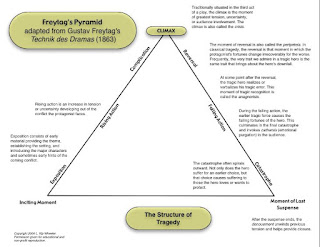
Plot: A plot is a series of events and character actions that relate to the central conflict.Here is where the actual narration of the story will happen. The events that occur or the description of the situation will be written in the plot. A plot must always have a conflict, which is the focus of any story.


Plot and Structure

The plot is the main sequence of events that make up the story. In short stories the plot is usually centered around one experience or significant moment. Consider the following questions:

  • What is the most important event?
  • How is the plot structured? Is it linear, chronological or does it move around?
  • Is the plot believable?

Climax/Conclusion: And this is where the story will come to its logical conclusion. If there is a plot twist, this is where you will include it. Always end your story in an interesting manner. Also, it is not necessary to give your story a definite ending.


American literature contains some of the world's best examples of the short story. Readers around the world enjoy the finely crafted stories of American writers such as O. Henry, Stephen Crane, Jack London, Mark Twain and Edgar Allen Poe.


What makes these authors such remarkable short story writers? They are true masters at combining the five key elements that go into every great short story: character, setting, conflict, plot and theme.

A character is a person, or sometimes even an animal, who takes part in the action of a short story or other literary work.

Characterization

Characterization deals with how the characters in the story are described. In short stories there are usually fewer characters compared to a novel. They usually focus on one central character or protagonist. Ask yourself the following:

  • Who is the main character?
  • Who or what is the antagonist?
  • Are the main character and other characters described through dialogue – by the way they speak (dialect or slang for instance)?
  • Has the author described the characters by physical appearance, thoughts and feelings, and interaction (the way they act towards others)?
  • Are they static characters who do not change?
  • Are they dynamic characters who change?
  • What type of characters are they? What qualities stand out? Are they stereotypes?
  • Are the characters believable?
  • Do the characters symbolize something?


Setting

Setting is a description of where and when the story takes place. . Authors often use descriptions of landscape, scenery, buildings, seasons or weather to provide a strong sense of setting.In a short story there are fewer settings compared to a novel. The time is more limited. Ask yourself the following questions:

  • How is the setting created? Consider geography, weather, time of day, social conditions, etc.
  • What role does setting play in the story? Is it an important part of the plot or theme? Or is it just a backdrop against which the action takes place?
  • Does the setting change? If so, how?
  • Study the time period, which is also part of the setting, and ask yourself the following:

    • When was the story written?
    • Does it take place in the present, the past, or the future?
    • How does the time period affect the language, atmosphere or social circumstances of the short stor


CONFLICT:  Conflict or tension is usually the heart of the short story and is related to the main character. In a short story there is usually one main struggle.The conflict is a struggle between two people or things in a short story. The main character is usually on one side of the central conflict.

On the other side, the main character may struggle against another important character, against the forces of nature, against society, or even against something inside himself or herself (feelings, emotions, illness).

  • How would you describe the main conflict?
  • Is it an internal conflict within the character?
  • Is it an external conflict caused by the surroundings or environment the main character finds himself/herself in?

CLIMAX:  The climax is the point of greatest tension or intensity in the short story. It can also be the point where events take a major turn as the story races towards its conclusion.

RESOLUTION:  The resolution is the end of the story. It focuses on how the conflict is ultimately resolved.

  • Are the closing sentences significant? How does the end relate or connect to the opening?

Narrator and Point of View

The narrator is the person telling the story.  Consider this question: Are the narrator and the main character the same?

By point of view we mean from whose eyes the story is being told. Short stories tend to be told through one character’s point of view. The following are important questions to consider:

  • Who is the narrator or speaker in the story?
  • Does the author speak through the main character?
  • Is the story written in the first person “I” point of view?
  • Is the story written in a detached third person “he/she” point of view?
  • Is there an “all-knowing” third person who can reveal what all the characters are thinking and doing at all times and in all places?
  • Is the narrator trustworthy?

Theme

The theme is built on a topic, such as death, hope, the American dream, etc. and how the topic affects the human condition, society, or life.  As a reader, focus on what the story is revealing about the topic.  The theme should be expressed as a statement, a general observation about human nature.The theme is the central idea or belief in a short story.

What a theme is NOT:

  • a word or phrase (topic or subject)
  • a command
  • a judgment

To help you construct the thematic statement, make a list of important images, topics, etc. found in the text.  Try to create a statement that includes the words in your list.


NOVELS

Novels are another example of fictional prose and are much longer than short stories.

NOVELLA

Some short stories, however, can be quite long. If a a short story is a long one, say fifty to one hundred pages, we call it a novella.


Work sheet

Source

Source

ernest-hemingway

Heming way style

hemingway tips

old-man-and-the-sea