Socrates

"The only true wisdom is in knowing you know nothing." 

Socrates

"To find yourself, think for yourself."

Nelson Mandela

"Education is the most powerful weapon which you can use to change the world."

Jim Rohn

"Success is nothing more than a few simple disciplines, practiced every day." 

Buddha

"The mind is everything. What you think, you become." 

Sunday, 29 November 2015

3. The Subject of screen Play

What do you need to write a screenplay?

 An idea, of course, but you can't sit down to write a script with just an idea in mind. You need a subject to embody and dramatize the idea.
A subject is defined as an action and a character. An action is what the story is about, and a character is who the story is about.

Every screenplay dramatizes an action and a character. Knowing your subject is the starting point of writing the screen­play. Every screenplay has a subject.When you can articulate your subject in a few sentences, in terms of action and character, you're ready to begin expanding the elements of structure and story.. Just keep doing it, and you will be able to articulate your story idea clearly and concisely.

How do you go about finding a subject?

An idea in a newspaper or on the TV news or an incident that might have happened to a friend or relative can be the subject of a movie. t's very simple. Trust yourself. Just start looking for an action and a character.
When you can express your idea succinctly in terms of action and character—my story is about this person, in this place, doing his/her "thing"—you're beginning the preparation of your screenplay.
The next step is expanding your subject.

Research is absolutely essential. All writing entails research, and research means gathering information. Remember, the hardest part of writing is knowing what to write.

Research is essential in writing a screenplay. Once you choose your subject, and can state it briefly in a sentence or two, you can begin preliminary research. Determine where you can go to  in­crease your knowledge of the subject. Dur­ing the screenplay, and gaining clarity about that need allows you to be more complex, more dimensional, in your character portrayal.There are two kinds of research. 
By doing research—whether in written sources such as books, magazines, or newspapers or through personal interviews—you ac­quire information. The information you collect allows you to oper­ate from the position of choice, confidence, and responsibility.

1 text research
That means going to the library and pulling out books and newspaper and magazine articles and reading about a period, people, a profes­sion, or whatever.
2.Live Research
It  means going to the source—doing live interviews, talking to people, getting a "feel" for the subject. If it is necessary or possible to conduct per­sonal interviews. They can give you a more immediate and spontaneous slant than a book, newspaper, or magazine story.
The principle rule of storytelling bears repetition: The more you know, the more you can communicate.

Research gives you ideas, a sense of people, situation, and locale. It allows you to gain a degree of confidence so you are always on top of your subject, operating from choice, not necessity or ignorance.

Start with your subject. When you think subject, think action and character..There are two kinds of action—
physical action and emotional action.
Physical action can be a battle sequence; or a race, or competition, or fight, fed by revenge,
Emotional action is what happens inside your characters during the story. Most films contain both kinds of action, physical and emotional.


Define the dramatic need of your character.
 Source: The Foundations of Screenwriting Book 
What does your character want? What is his/her need? What drives him to the reso­lution of your story? 


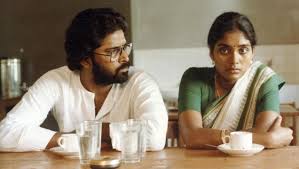
source http://www.frontline.in/other/not-art-for-arts-sake/article6808027.ece In Veedu the heroin want t build a home for their own, We must define the need of your character. What does he/she want?In Veedu Sutha want to build a home. . That is her need.The need of your character gives you a goal, a des­tination, an ending to your story. How your character achieves or does not achieve that goal becomes the action of your story.
All drama is conflict.  If you know the need of your character, you can create obstacles to fulfill that need. How he/she overcomes those obstacles is your story. Conflict, struggle, overcoming obstacles, both inside and outside, are the primary ingredients in all drama—in comedy, too. It is the writer's responsibility to generate enough conflict to keep the reader, or the audience, interested. The job of the screenwriter is to keep the reader turning pages. The story always has to move for­ward, toward its resolution.
To knowing your subject. If you know the action and character of your screenplay, you can define the need of the character and then create obstacles to that need.  It is the fuel that feeds the story engine.
Without conflict, there is no action. Without action, there is no character. Action is Character. What a person does is what he is, not what he says!
"For every action there is an equal and opposite reaction" is Newton's Third Law of Motion, a natural law of the universe. The same principle applies to your story. It is the subject of your screenplay.As an exercise, find a subject you want to explore in screenplay form.
If need be, look through the daily newspaper to see if a per­son, or incident, or situation grabs your attention. Think about how you might want to structure your story, then reduce it to a few sentences in terms of action and character, then write it out. Remember, it may take you a few pages to find out what you want to do, and another page or two to clarify it, but then you'll be able to eliminate the unnecessary and focus on your subject.
Source : Syd field, P - 31-42,


Monday, 2 November 2015

Social media -Youth culture

Social media is a term used to describe the interaction between groups or individuals in which they produce, share, and sometimes exchange ideas over the internet and in virtual communities. The impact of social networks on young people is significant. Children are growing up surrounded by mobile devices and interactive social networking sites such as Twitter, MySpace, and Facebook, which has made the social media a vital aspect of their life. It have many facilities on same channel like as communicating ,texting, images sharing , audio and video sharing , fast publishing, linking with all over world, direct connecting. It is also cheapest fast access to the world so it is very important for all age of peopleSocial network is transforming the manner in which young people interact with their parents, peers, as well as how they make use of technology. Its use is increasing day by day with high rate in all over the world. Majority of youth is shifting speedily from electronic media like as television viewers and radio listeners to the social media among all age of group. It is estimated that there are 80 percent of teen Internet users

According to Merriam Webster  Youth is very important for future of any nation and country’s progress and development. Now a day Social media is essential for youth in the field of education to learn new trends in education, to improve writing and communicating skills, cultural promoting, religious and political information gathering and sharing links, better living style, growth and development of society (Merriam Encyclopedia, 2001).

The effects of social networking are twofold. On the positive side, and on the negative side, There are also a lot of benefits that come from social media and the internet for teenagers. Social media having various impacts on youth’s life in both ends some time impacts are in the favor of youth’s social life and sometimes theses impact are negative to its user


1.    Keep In Touch 

Social media or networking is a great tool for connecting people together. We can touch in touch with our family and friends by using social network and we can  sharing photos, messages, videos, etc..it is easier for you to keep in touch with people in another country through Internet.

Source Of Learning Education

Students  can go to Internet and learn or exchange knowledge. In internet we are provided by  lots of topic and sources that we can get there. Due to the “sharing” option, social networking sites gives people a chance to share informative articles, videos with each other. Moreover, it can help us reach out to their coaches, academic experts, and teachers easily and collaborate with their peers on school subjects.
Save Time And Money

We can stay at home and do some works and search some useful information without going to book store or going to college. We can get more certificates via online courses. Teenagers or youth improve knowledge just with network at their home. 

.Friends


Empathy

On the social networking sites, we tend to share our lives, both the ups and downs, with those people we think will care. They will listen to what you have posted and assist you in dealing with problems you are facing.

Build Relationships

There is no doubt to say that social network could lead to the formation of new relationships. Networking sites could help foster friendships and perhaps more besides.

 Encourage Community Participation
We can contribute our own opinions as well as thoughts on certain subjects and themes that interest them. By taking part in discussions, we will engage in positive self-expression.

Improve Self-Confidence

In fact, Facebook good comments and likes tend to be strongly positive. In those pick-me-up days, people can check their personal profiles and automatically get affirmation, self-confidence, self-esteem, and validation.  Youth can personalize their profile; thus, they might experience a sense of independence. Youth can able to share their own ideas, or interacts with other people, they also participate in groups that help them “fit in” as well as foster their identity.

II.  Effects Of Social Media – Top Negative Effects Of Social Networks

Addiction 

Increased Violence

Social media can increase risks of violence and sex abuse due to some sites. Teenagers or youth watch videos, read bad news will relate to negative action.
Increased Threats 

One of the negative effects of social medial is increased threats. As the result, be careful with everything you upload or download.

Increased Comparison 

Increases comparison belongs to common negative effects of social media on youth. Actually, you can find lots of information affecting to your life and work. So you will have comparison and that is a negative effect. This action will change your behavior and increase bad comparisons to other people.
Increased Alcohol Use 

A study reports that there is a close relationship between drug or alcohol use, social media, and teenagers. 70% of teenagers use tobacco, alcohol. Sitting in front of computer and they tend to use more alcohol and tobacco. 
Make Us Unhappy 

Social media reduce our moods and it can make us unhappy. Online relations will not last as we  have a true relationship with friend in true life.

Overwork For Brain 

There is a trend to almost of the users when they use social media – overwork for our brain. If you use Internet in almost of free time, you will increase tasks for your brain and cause tiredness. Our brain cannot have enough capacity to control and manage all the tasks.

A Fall Sense Of Connection

Though social networking sites like Facebook and Twitter boost the connections among people, they still bring a fall sense of connection to some of them. Social media sites fails to distinguish the meaningful relationships they foster in the real world, and the numerous casual relationships formed via social media. 

Reduced Productivity
Today, a lot of sites also provide a huge distraction to students who might show more interest in what their friends are posting than their tasks. As a result, they will be less productive than normal. 

Affect Self-Esteem

Comments and likes on Facebook can boost our self-esteem, but in some cases, it also affects negatively our self-esteem, too. People often look at others’ social networking sites, admire their clothes, lifestyles, or even relationships. Sometimes, they wish their own lives were as great as others. This problem is not taken into consideration and people will end up feeling miserable which could at times, lead to low self-esteem, and depression.

Cyber-Bullying 

Cyber-bullying has become a main issue for teenagers in recent years. The online attacks could leave deep emotional scars, victims might be driven to suicide. The anonymity afforded online could bring out dark impulses which may otherwise be suppressed. Cyber-bullying is popular among youth in recent days.
Spend More Money

It is said that heavy social media use may be correlated to lower self-control that marketing experts commonly believe will lead to higher spending. Ultimately, how people counteract this is by increasing their self-awareness.
 Distraction

One of the main disadvantages of social networking is the distraction in daily life. The majority of people could not go an hour without checking for updates and this could cause us to get distracted from what is actually important in life. Therefore, instead of concentrating in work, family, and school, people tend to spend the majority of their time on looking for the status updates, photographs, or headlines. 


Alter The Appetite

Negative effects of social media on the human life.  In reality, one research suggested that even looking at food images after your meal could trigger hunger.

Isolation
People will spend increasing amounts of time on social networks, they experience less face-to-face interaction. Social isolation can impair brain hormones, which is similar reason socially isolated people experience tremendous levels of stress, anxiety aggression, and other emotional issues.

Source: http://vkool.com/effects-of-social-media/

Common Perceptual Tendencies

ATTRIBUTION
It is the process of attaching meaning to behaviour. We attribute meaning to both our actions and actions of others.  but we usually use different yardsticks. Attribution is a one of biggest problem  and interfere with understanding and agreement.

WE MAKE SNAP JUDGEMENT
There are many cases when judging others without enough knowledge or information can get into trouble.. Snap judgement become particularly problematic when they are based on stereo typing. Stereotypes based on primitive categories like race genderThe ego centric tendency  and age.

WE OFTEN JUDGE OURSELVES MORE CHARITABLE THAN WE JUDGE OTHERS
We have the self serving bias.  when others suffer we often blame the problem on their personal qualities. On other hand when we suffer we find explanation outside ourselves. We trend to judge ourselves in the most generous terms as possible.

WE PAY MORE ATTENTION TO NEGATIVE IMPRESSION THAN POSITIVE ONES
Attitude make sense. People are ware of both the positive and negative traits of another. They tend to be more  influenced by the negative traits.

WE ARE INFLUENCED BY WHAT IS MOST OBVIOUS
There are three factors that cause us to  notice some messages and ignore others.  they are stimuli, motives, and  contrastive
.
WE CLING TO FIRST IMPRESSIONS EVEN IF WRONG
Labeling people according to our first impressions is an inevitable part of the perception process. The labels are a way of making interpretations.

WE TEND TO ASSUME THAT OTHERS ARE SIMILAR TO US
People commonly imagine that others possess the same attitudes and motives that they do. People with low self esteem  imagine that others like them too.

PERCEPTION AND CULTURE
When communications come from different cultures the potential for misunderstanding is ever greater. Culture provides  a perceptual filter that influences the way we interpret even the simplest event.  North American culture view that talk as  desirable. Silence in conversational situations has a negative value. It is likely to interpreted as  lack of interest unwillingness to  communicate , hostility anxiety, shyness.  In asian cultures discourage the expression of thoughts and feelings.

source:mmunication-page no 48  Understanding Human communication, tenth indian edition Ronald B adler George Rodman

Wednesday, 28 October 2015

Steps in Perception-How the ways we perceive others shape our interaction with them

Steps in perception Process or How to perceiving others

Steps in the perception Process

Their are three steps in perception
Selection
Organisation
Interpretation

Selection
We have selected which data we will attend to. The selection may influence by our interest or motives and our emotional state that also shape what we select. 

Organisation
Another step is organisation. After selecting information from the environment we must arrange it in some meaningful way in order to make sense of the world. We call this stage Organisation.
We organize our perceptions of other people using perceptual schema . 
PHYSICAL  CONSTRUCT We classify people according to their appearance  beautiful, ugly fat or thin old or age.
 Rule constructs use social position student, attorney, wife etc
Interaction constructs focus on social behaviour friendly helpful aloof sarcastic etc
Psychological constructs refer to internal states of mind and dispositions confident, happy, insecure.

 the kind of constructs we use strongly affect the way relate to others.

Interpretation

We have selected and organised our perceptions and we interpret them in a way that makes some sort of sense. Interpretation plays a role in virtually every type of communication. 

There are several factors that cause us to interpret a persons behaviour in one way to another. that is

      1.  the degree of involvement
      2. relational satisfaction
      3. personal experience
      4. assumption about human behaviour
      5. Expectation
      6. knowledge of others


Monday, 12 October 2015

the Indian People’s Theatre Association, or IPTA

It established in 1943 at Mumbai’s Marwari School, the Indian People’s Theatre Association, or Ipta, has undergone several transmutation. Then the split in the Communist Party of India resulted in offshoots like Safdar Hashmi’s Jana Natya Manch forging their own identity in the 1970s. Ipta has more than 500 units in around 30 states and union territories, with more than 12,000 members.  It’s no longer the blacklisted organization of its early days, but it’s still largely independent of state  get festival and repertory grants from a governmental agency.

Origin of People’s Theatre in India

The Indian People’s Theatre Association (IPTA) was formed as the cultural front of the Communist Party of India (CPI) in 1942. It was the first national-level theatre movement in India, and primarily focused on proscenium plays1. IPTA regularly performed short skits and plays in working class apartment buildings, “where workers with their families would gather on one side or peep through the doors and windows of their dwellings” [Tanvir 2007 : 68]. One of the few street plays performed was Shanti Doot Kamgar (“Working Class : Harbinger of Peace”), inspired by the Chinese Revolution, where “communist activists would visit restaurants, and other public places, cook up some kind of quarrel between themselves, and when people’s attention was sufficiently drawn to them, one of them would scramble up on top of a table and deliver an agitational speech summoning support for the cause” [Tanvir 2007:68].

Post-independence, with several internal conflicts within the communist movement, IPTA gradually became defunct. By the late 1950s, it was formally dissolved as a national organisation, with only independent state units existing, including one in Delhi.

IPTA is considered one of the oldest associations of performing art in India. in fact, over the last five to six decades notable artists, musicians, writers, dancers, singers and directors have been a part of the Indian People's Theatre Association. Personalities like Amar Shaikh, Majrooh Sultanpuri, Homi Bhabha, Sombhu MitraKaifi Azmi, Shanti Bardhan, Krishanchander, Sahir Ludhianvi, Balraj Sahni, Mohan Segal, Harindranath Chattopadhyay were all a part of this IPTA. This made IPTA to be at the forefront of the Indian Theatre movement. 

It also conducts a summer theatre camp for children, and liaises with other Ipta branches in the state, like those in Raipur, Bilaspur, Bhilai, Dongargarh, Balco (Bharat Aluminium Co. Ltd) township and Ambikapur—each of which has its own set of activities.

Directors, actors, scriptwriters, lyricists, music directors and dance directors – a large spectrum of the talent that went into filmmaking – came from the IPTA, moulding the vision of the world that the film presented.6 In the IPTA documents on how to prepare for the VII Conference (1953), there is the following section: “Film: Since a large number of IPTA members and progressive writers and artistes are entering into the film world, due to the increasing demand of the people for healthy and realistic films, the present position of the film industry requires special study. 

One of the most significant dramas staged by Indian People's Theatre Association was Nabanna, a Bengali drama. The word literally refers to harvest and is a Bengali folk festival thet celebrated good yield of crops. The drama was penned down by Bijon Bhattacharya and directed by Sombhu Mitra. The Bengal of 1943 was bogged down by infamous famine. The play portrayed the predicament of the masses and indifference of the British government to the plight of the people. Other dramas that were staged by the IPTA include Nava Jiboner Gaan (Bengali) by Jyotirindra Moitra, Desha Sathi in Marathi, Prarambham in Telugu and Zubeida directed by Balraj Sahni. All these plays, in one way or the other, mirrored the sufferance of the common people due to the then economic and socio-political conditions. 

Voice of the streets -Safdar Hashmi


Street theatre as one of the most interactive, intimate, and impactful forms of the performing arts. According to  Safdar Hashmi Contemporary Indian street theatre has been drawing in equal measure  from our folk and classical drama as well as from Western drama .

It is a twentieth century phenomenon, born of the specific needs of the working people living under capitalist and feudal exploitation. 

Street theatre is basically a militant political theatre of protest. Its function is to agitate the people and to mobilize them behind fighting organizations.”


In fact, it has often been used as a medium to draw attention to social and political issues. Known as the oldest left-wing street theatre groups, city-based theatre group Jana Natya Manch (popularly known as Janam) has helped advance the expansion of this form of theatrical production.


The Janam—has put together a number of successful street productions for over 40 years. 


 Safdar Hashmi was a street drama artist. 

Safdar and his team were staging the play as part of their campaign for  Centre of Indian Trade Unions (CITU)-supported candidate in the Ghaziabad municipal elections. THEATRE activist Safdar Hashmi was brutally attacked while performing a street play, Halla Bol, at Jhandapur village in Sahibabad, on the outskirts of Delhi, on January 1, 1989.


When Safdar Hashmi was killed, he was 34 and had been a member of the Communist Party of India (Marxist) since the early 1970s. 


A bunch of student activists had revived the Delhi unit of the IPTA (Indian People’s Theatre Association) in late 1972. partly for ideological reasons .  


During the Emergency they had been totally destroyed. They needed our theatre in their reorganization efforts but they had no funds.”


A new kind of theatre was now needed, that a play that was 

(a) inexpensive 

(b) mobile and portable [and] 

(c) effective.” 


They read dozens of plays but none satisfied them. Janam decided to write its own plays. The first of these was Machine, a short, 13-minute play with a cast of six, acted in a circle with the audience on all sides, first performed on October 15, 1978. 


The idea of Drama ' Machine' emerged: as

“There is a chemical factory… called Herig-India. The workers there did not have a union. They had two very ordinary demands… They wanted a place where they could park their bicycles and… a canteen where they could get a cup of tea… The management was not willing even to grant these demands… The workers went on strike and the guards opened fire, killing six workers. So this old Communist leader told me about this incident… and he said, ‘Why don’t you write a play about it?’”


The initial draft of Machine was written by Safdar and another actor, and was finalized on the floor, where everyone presents contributed. Machine is an abstract play, in a way. 


The machine, created very simply by human figures, is the symbolic representation of capitalism. The worker, the capitalist and the security officer are all parts of the machine; they are complementary parts of a system founded upon the exploitation of one by the other; their co-existence, then, is unequal.


In the meanwhile, in December 1979, Janam’s first election play, Aya Chunao, was performed extensively in Haryana. Seven plays, then, in 14 months, totaling about 500 shows. 


The   street theatre activity was an explosion. This occurred in response to the attack on Janam on January 1, 1989, and the death of Safdar Hashmi as a result of this attack the following day.


Janam was performing Halla Bol(Raise Your Voice), a play on a recent seven-day industrial strike led by the Centre of Indian Trade Unions (CITU).


After the attack and Safdar’s murder, 

Halla Bol became a rallying cry; it was performed by hundreds of old and new groups in several languages.  Doing the play became, by itself, a means of expressing anger, an emblem of protest, a gesture of resistance; the fact that Halla Bol is also quite a delightful, innovative play was nearly incidental. The attack on Janam and Safdar’s murder provoked nationwide (and international) protest. Street theatre, naturally, was at the very centre of these protests.


Thus, when artists decided to observe April 12, Safdar’s birthday, as the National Street Theatre Day.


Safdar was a multifaceted artist and was constantly soaking up new influences and trying out new technologies. He wrote a 

1.     24-part television serial on adult literacy and 

2.     women’s empowerment for the United Nations Children’s Fund; 

3.     he wrote a number of songs and plays for children,

4.     he designed posters for a number of mass organisations; 

5.     he took photographs; 

6.     and he conducted theatre workshops.


  •  He worked for a while at the West Bengal Information Centre in Delhi, and was instrumental in organising the first Ritwik Ghatak retrospective in the capital.
  •  
  • He also organised screenings of Cuban films, in particular those of Tomas Alea. 
  •  
  • He was a major force in rallying artists and intellectuals around larger issues of concern: at the time of the anti-Sikh riots in 1984 and subsequently in defence of secularism; in reviving the legacy of Premchand; in rallying artists and intellectuals in support of the seven-day strike in 1988.


“Safdar was an extremely broad-minded man, in a political sense. He wanted to open a broad cultural front. He could write poetry and plays, paint, act and sing. 

His idea of a cultural front was not confined to theatre. 


He visualized painters, musicians, singers, dancers, writers and critics – all to be drawn into a movement out of common interest. He was a creative genius, endowed with the zeal, energy and determination of a far-sighted organiser and theatre visionary.” •wife about Safdar


Safdar Hashmi’s birth anniversary—April 12—is also celebrated as National Street Theatre Day. To mark the occasion this year, Janam has been performing their play Andher Nagri all throughout the week in various neighbourhoods in the city. Inspired by writer Bharatendu Harishchandra’s eponymous play (1881), Andher Nagri is about a king who isn’t comfortable with any form of cultural expression and hence directs his nobles to punish the locals.

Wednesday, 7 October 2015

படுகளம்

https://www.youtube.com/watch?v=l6PGYO3gz9U

சூழ்ச்சியால் பொன்னர்,சங்கர் கொல்லபட்ட இடம்.மாசி மாதம் மஹாசிவராத்திலிருந்து 7 நாட்கள் விழா நடைபெரும்,7ஆம் நாள் விழா மிகவும் பிரசித்திபெற்றது,கோவிலைச்சுற்றி 25க்கும் மேற்பட்ட நாடகம் நடத்தப்படும்http://wikimapia.org/10120600/%E0%AE%AA%E0%AE%9F%E0%AF%81%E0%AE%95%E0%AE%B3%E0%AE%AE%E0%AF%8D

துரியோதனன் படுகளம் 

தமிழ்நாட்டின் வடபகுதியில், துரியோதனன் வதத்தை முன்வைத்து கிராமச்சடங்காக நிகழ்த்தப்படும்  நிகழ்வாகும் படுகளம்.

கூத்துப்பட்டறை நிறுவனரும் எழுத்தாளருமான ந.முத்துசாமி எழுதி அரங்கேற்றிய புகழ் பெற்ற நாடகங்களில் ஒன்று படுகளம். ந.முத்துசாமியின் புதல்வரும், அவருடைய நாடக இயக்கத்தில் பங்கேற்றவருமான ஓவியர் மு.நடேஷ், அந்த நாடகத்தை தன்னுடைய இயக்கத்தில் புதிய வடிவில் மார்ச் ஒன்றாம் தேதி மீண்டும் அரங்கேற்றினார்.
தமிழ்நாட்டின் வடபகுதியில், துரியோதனன் வதத்தை முன்வைத்து கிராமச்சடங்காக நிகழ்த்தப்படும் படுகளம் நிகழ்வை மையமாக வைத்து உருவாக்கப்பட்ட நவீன நாடகம் இது. மகாபாரத காலத்துக்கும்,நிகழ்காலத்துக்கும் இடையிலான உரையாடலாக இந்த நாடகத்தைப் பார்க்கலாம். மகாபாரதத்தின் 18-ம் நாள் போராட்டக் களனாக வடிவம் கொண்டு அன்றைய நிகழ்வுகளைப் பின்பற்றிச் செல்லும் நாடகம் இது. திரெளபதியின் துகிலுரிப்பு, கற்புநிலை, பெண்ணுடல், கொண்டாட்டம், சண்டைகளை முன்வைத்து பாத்திரங்களின் உரையாடல்கள் சமகாலத்துக்குக் கொண்டுவருகின்றன. கூத்திசைத்தும், ஆடியும், ஓடியும் நாடகத்தைப் பல தளங்களுக்கு நகர்த்தினார்கள் நடிகர்கள். நடிகர்களும் சாதாரண உடையமைப்புடன் கடந்த காலத்தைச் சமகாலத்துக்கு இழுத்து வரும் முனைப்பு கொண்டிருந்தனர்.http://tamil.thehindu.com/general/literature/%E0%AE%AE%E0%AF%80%E0%AE%A3%E0%AF%8D%E0%AE%9F%E0%AF%81%E0%AE%AE%E0%AF%8D-%E0%AE%AA%E0%AE%9F%E0%AF%81%E0%AE%95%E0%AE%B3%E0%AE%AE%E0%AF%8D/article6971673.ece

Tuesday, 6 October 2015

GENDER AND LANGUAGE


Gender: a social construct (within the fields of cultural and gender studies, and the social sciences.General usage of the term gender began in the late 1960s and 1970s, increasingly appearing in the professional literature of the social sciences. The term helps in distinguishing those aspects of life that were more easily attributed or understood to be of social rather than biological origin (see e.g., Unger & Crawford, 1992).

Some of theorists and researchers though have find that some of significant difference between men and women speak. 

Content

On average men and women discuss different range of topics.Certain topics were common to both gender. Female friends spent much time discussing personal and domestic subjects, relationship problems, family health and weight food and clothing, men and other women. Women were more likely to gossip about close friends and family. By contrast men spent more time  gossiping about sports figures and media personalities. 

Reason for communicating    

Men discussions involve greater amount of joking and good natured teasing. By contrast women's conversations focus more frequently on feelings, relationships and personal problems.      Women use conversation  to pursue social needs. Female speech typically contain statements showing support  for the other person, demonstrations of equality and efforts to keep the conversation going.

Conversational style

Women ask more questions. Women's speech that is less powerful and more emotional than men. Women's talk was judged more aesthetic where as men's talk was seen as more dynamic, aggressive, and strong.                                                      
 According to Lakoff, women’s talk has the following properties: 1) A large set of words specific to their interests: e.g. colour words like magenta, shirr, dart (in sewing), etc. 2) “Empty” adjectives such as divine, precious, lovely, cute, etc. 3) Tag questions and rising intonation in statement contexts: What’s your name dear? Mary Smith? 4) Use of hedges 5) Use of intensive “so” 6) Hyper correct grammar: women are not supposed to talk rough 7) Super-politeness 8) Ask more questions  .  Women speak a language of connection and intimacy.  Men speak a language of status and independence

Boys: 
• Tend to play in large groups that are hierarchically structured • Their group has a leader • 
Status is negotiated via orders, or telling jokes/stories 
• Games have winners and losers 
• Boast about skills, size, ability 
Girls:
 • Tend to play in small groups or in pairs • 
The center of a girl’s social life is a best friend • Within the group, intimacy is the key • Differentiation is measured not by status, but by relative closeness • Many of their activities do not have winners and losers (e.g. in hopscotch or jump rope, everyone gets a turn). • Girls are not expected to boast (in fact they are encouraged to be humble), or give orders (they would be bossy) Girls do not focus on status in an obvious way. They just want to be liked.

Myth: Women talk more than men
However:  Research found that men talk more often (Eakins and Eakins): men’s turns 10.66 secs, women’s 3-10 secs at faculty meetings  At academic confernces (Swacker): women 40.7% of the presentations, 40% of audience. But only 27.2% asked questions. There seems to be an asymmetry between private and public speaking—Tannen’s rapport versus report talk