Socrates

"The only true wisdom is in knowing you know nothing." 

Socrates

"To find yourself, think for yourself."

Nelson Mandela

"Education is the most powerful weapon which you can use to change the world."

Jim Rohn

"Success is nothing more than a few simple disciplines, practiced every day." 

Buddha

"The mind is everything. What you think, you become." 

Sunday, 22 January 2012

Definition and meaning of Communication?


Communication is the production and exchange of information with meaning by use of signs and symbols. It involves encoding and sending messages, receiving and decoding them, and interpreting the information and meaning.  Communication saturates all levels of human experience.

Communication is exchange of ideas and meanings between two persons.  Generally define communication as the process of transfer of information between two sources with meaning.
Thompson, the well-known sociologist defines communication is a form of action which take places in a social content and is related to question of economic, political, coercive and symbolic power in society.

Communication has been classified in to several types in terms of the verbal and non- verbal the technological and non- technological.

One common typology relates to the size a social group or the number of people involve in the  experience of communication .
they are


 Intrapersonal communication:
        Communication played a vital role in nation building and development. communication also acted as one of the sources for modernization. When one communication with himself to develop useful ideas. It is a individual reflection, contemplation and meditation.
       

Brainstorming:
        It is known that ideas orginate in the human mind and speech. It is the vehicle of thought. It was searching for a way to encourage creativity, to simulate innovative ideas.    It has been used for a wide variety of purpose, such as new product development improvement and adaptation proposing solution to social problems, management relations, communication marketing campaign and strategies.


Interpersonal Communication:
        It is otherwise called as dynamic communication. It is direct face to face communication between two person. It is in other words a dialogue or conversation without the intervention of another person or a machine like the telephone or a two way radio or television set
It is personal, direct, intimate mode of communication.  It is allowing for maximum interaction and exchange of message in word and gesture.
        It is more persuasive and influential than any other types of communication.
        It involves the interplay of words and gestures, the warmth of human closeness and in fact all the five senses (sight, Hearing, Touch, Smell, and Taste). In interpersonal communication, sharing at the most intimate and open level
        For instance,  Interpersonal communication between a medical representative and a doctor, clerk and a manager.

The Three Stages of Interpersonal communication:

1. Phatic Stage:
                It is initial exploratory stage of communication. It begins with a “hi!” or “Hello!” , “How are you?” , “Vanakkam”. The phatic stage is patterned according social and cultural norms and rituals.                      
2. Personal Stage:
                The second stage is called the personal stage. It introduces more personal element in to the conversation. In this stage even they are likely to willing to talk about personal matters, such as ones profession, the family and health problems.
3. The Intimate Stage:
                This stage is reserved for friends and relatives. In this stage communication reveal the innermost thoughts and feelings, their fears and joys, weakness and strengths.


Group Communication:
        Group communication is thus more complex process than interpersonal communication
        The theatre, religious service,  dance performance, carnivals, the kumbh mela, folk events, Dassara are examples of group communication. Village markets meals and local coffee shop are instances of informal group communication.
Group communication can be classified as
1)  Intra group communication where a communication take place in the small group of people in a same group. For Example, our class room, among our department.
2)  Intergroup communication, communication between various group of people. For Example, the communication between various department students.
3)  Organization Communication is the form of communication is used in business enterprises.

Difference between Group & Interpersonal Communication
Group Communication
Interpersonal communication
1.   The less personal and intimate is the possible   communication .
Involves the interplay of words and gestures and above all the warmth of human closeness.
2.   Tends to become more and more of monologue for participation become problematic
To understanding and participation
3.   The mutual participation and understanding among the members suffer much
Too understanding and participation
4.   Feedback is more difficult to measure
The feedback is instantaneous
5.   The art of effective public speaking is more necessary at the group level than at Interpersonal level
Face to face communication, more persuasive and influential communication.


Mass Communication
Mass communication is the extensive tool of group communication by the tools of mass communication such as books, the press, the cinema, radio, television, video and the internet.Mass Communication is a ommunication at a distance with technology meditations, production transmission and reception.

Daniel Lerner: termed mass media  as mobility of multipliers and       Wilbur Schramm considers them to be magic multipliers
      

Thursday, 19 January 2012

Westley and MacLean’s Model of Communication-1957


Westley and MacLean’s model of communication
is proposed by  Bruce Westley and Malcolm S. MacLean.
Westley served as a teacher at the University of Wisconsin,Malcolm was director of University of Journalism School and co founder of the University College at University of Minnesota.

This theory can be work under two contexts,they are Interpersonal and Mass communication. 
Model:

1, X2, X3 and X4….—are news articles or information, Feedback (f), Clients (A), Reader or Audience (B) and Gate Keeper (c)
Westely and Maclean realized that communication begins only when a person receives message from surroundings.

This model considers a strong relation between responds from surroundings and the process of communication.
Each receiver responds to the message they received based on their object of orientation.

·         Source (A) – Source is the message creator and sender
·         Environment (X) – Environment is the physical and psychological situation where the message is being created and sent.
·         Sensory experience (X1…) – Sensory experience is the first thing that the source sees by which the source gets the idea for the formation of the message.
·         Objects of Orientation (X1, X2,…) – Objects of orientation is the person’s social and cultural reality that has formed from his/her past experiences and teachings.
·         Message Interpretation or Coding (X’) – Message is interpreted with the objects of orientation of the receiver of the message.
·         Receiver (B) – The person who gets the message sent by the source and the person who interprets according to his/her objects of orientation.
·         Object of Orientation of Receiver (X, b) – The views and ideas of the receiver or his/her social reality is his/her object of orientation. That is how the receiver interprets the message.
·         Feedback (f) – The receiver forms another message after interpreting the message and sends it back to the sender. It is known as feedback.


Example: A Daily News Papers will receive many Press releases from Many Public Relations Agencies on behalf of their clients. In this case, News paper will publish the selected Press release due to the space constraints. Then, Readers can directly respond to the client or they can respond to the News daily which published in the Newspaper. If Readers responded to daily News paper, it will communicate the feedback to concern PR Agency. X1, X2 and X3—are Press Release, Feedback (f), Clients (A), Reader (B) and Daily News Paper (Gate Keeper) (c) 1. Feedback Loop between Reader (B) and News Paper (C) – fBC 2. Feedback Loop between News Paper(C ) and Client (A)- fCA 3. Feedback loop between Reader (B) and Client (A)- fBA

Example:
Advertisement  given thro Television
A Television will receive many advertisement from their clients.
In this case, Television will broadcast the selected advertisement due to the time constraints.
Then, viewers can directly respond to the client or they can respond to the television which broadcast in the television.
If viewer responded to television, it will communicate the feedback to client./agency
X1, X2 and X3—are advertisement, Feedback (f), agency (A), Reader (B) and television/media (Gate Keeper) ©
Merits
  1. This model accounts for Feedback.
  2. It can account for both interpersonal communication and Mass communication.
  3. It is a predictive model of communication and very descriptive also.
  4. Westley and Maclean communication model is Two Dimensional.

Demerits

It cannot account for multi dimensions; this means this model will not be applicable for  typical communication events that involve broader context and wide range of communication messages.

HYPODERMIC NEEDLE THEORY

The "hypodermic needle theory" implied mass media had a direct, immediate and powerful effect on its audiences.

The Hypodermic Needle Theory, also known as the Magic Bullet Theory, posits that mass media wields a direct, immediate, and powerful influence over its audience. 

Developed in the 1940s and 1950s, this communication model suggests that media messages are "injected" directly into the minds of a passive audience, who receive and accept them without resistance or critical thought.

This theory likens the media's influence to a bullet fired from a "media gun" or a needle injecting ideas into the viewer's mind, creating uniform thinking across a large population. Audiences are viewed as powerless to resist the media’s influence, as they have little to no alternative sources of information.

Harold Lasswell, a prominent theorist, studied Nazi propaganda to understand how such media messages persuaded and mobilized the German public during World War II. The theory’s core assumptions are that mass media can directly affect behavior and that the audience, seen as passive, will respond uniformly to the messages it receives.

The 1938 broadcast of War of the Worlds is often cited as an example of the Hypodermic Needle Theory in action. The widespread panic caused by the broadcast, where many believed an alien invasion was real, illustrated how media could manipulate and shape public perception in a powerful and direct way. This led theorists to view media as a potentially dangerous tool for influencing and controlling audiences.


Core Assumptions and Statements 

 1.The theory suggests that the mass media could influence a very large group of people directly and uniformly by ‘shooting’ or ‘injecting’ them with appropriate messages designed to trigger a desired response.

2.This theory (a bullet and a needle) suggest a powerful and direct flow of information from the sender to the receiver.

3.The bullet theory graphically suggests that the message is a bullet, fired from the "media gun" into the viewer's "head".

4. The hypodermic needle model suggests that media messages are injected straight into a passive audience which is immediately influenced by the message.

They express the view that the media is a dangerous means of communicating an idea because the receiver or audience is powerless to resist the impact of the message.

There is no escape from the effect of the message in these models. The population is seen as a sitting duck and passive.  They are seen as having a lot media material "shot" at them. People end up thinking what they are told because there is no other source of information.


Wednesday, 18 January 2012

Two step flow theory-Katz and Lazarfeld’s Model 1944 -55


Katz and Lazarfeld’s Model  1944 -55
It is otherwise  called as
  1. Two step flow theory
  2. Effects theory  And
  3. Limited effects theory
  In 1944 Paul Lazarsfeld, Bernard Berelson, and Hazel Gaudet developed two step flow theory. They are  focused on the process of decision-making during a Presidential election campaign. 

Elihu Katz and Paul Lazarsfeld and his collegues developed two step flow theory on 1955.  This theory asserts that information from the media moves in two distinct stages.  Ideas often flow from the mass media to less active section of the population through the opinion leaders.

The power of the mass media therefore is indirect and is reduced by the influence of local opinion leaders. The power of media therefore is indirect and is reduced by the influence of local opinion leaders.
  •  First, opinion leaders who pay close attention to the mass media and its messages receive the information.
  • ·
  • Opinion leaders pass on their own interpretations in addition to the actual media content.
  • ·
  • The term ‘personal influence’ was  intervening between the media’s direct message and the audience’s ultimate reaction to that message.·         

  • Opinion leaders are quite influential in getting people to change their attitudes and behaviors and are quite similar to those they influence.


Meaning of Two step theory

  • Media rarely directly influence individuals.
  • People are not easily manipulated by media content
  • There is a two step flow of media influence
  • Most people have developed strongly held group commitments such as political party and religious affiliations.That individual media messages  are powerless to overcome
  • When media effects do occur they will be modest and isolated . They are some how cutoff from the influence of their people. They are undermined by social crises.eg. educated urban people

The two-step flow theory has improved our understanding of how the mass media influence decision making.
The theory refined the ability to predict the influence of media messages on audience behavior, and it helped explain why certain media campaigns may have failed to alter audience attitudes and  behavior.


Monday, 16 January 2012

OSGOOD- SCHRAMM Circular MODEL OF COMMUNICATION-1955

OSGOOD- SCHRAMM Circular MODEL OF COMMUNICATION-1955     or 

The process and effects of communication-1955


Wilbur Schramm's models presents a complete treatment of the fundamentals of communication.This model offers a classic general explanation of the nature of communication. 

According to Wibur Schramm, to know how communication works. It would be necessary to study the communication process in general when two people communicate with each other there occurs a sharing of information, idea, or an attitude. In this process of sharing  at least three elements are involved the source or the communicator, the message or the content, and the destination or the receiver.


It can happen within our self(Intra personal communication) or

two people(Inter personal communication)

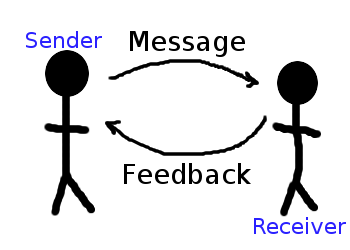
each person acts as both sender and receiver and hence use interpretation.

It is simultaneously take place e.g. encoding, interpret and decoding.


In circular model we found that communication ending up where it started off.In fact as an communication goes on the noise get less and personality more helpful for effective communication.


If we consider that he source and encoder are one person decoder and destination are another and the signal is language. This diagram represents human communication.The personality box would get bigger and noise box would get smaller.


This model also known as " The process and Efeeects of communication"1955.  In this model he introduced the concept of field of experience.  In addition reemphasising the element of  source, message and destination. It suggested the importance of encoding and decoding process and role of field experience.


Advantage of Osgood- Schramm model of communication

Dynamic model- Shows how a situation can change

It shows why redundancy is an essential part

There is no separate sender and receiver, sender and receiver is the same person

Assume communication to be circular in nature

Feedback – central feature.


Shannon and Weaver-mathematical model of communication


Shannon and Weaver - 1949  
The academic field of mass communication were heavily influenced by  the engineering/mathematical  model of communication.

Communication was conceived as a linear model of transmission of a message from a source to a receiver via a signal producing transmitter. Shannon and Weaver’s mathematical theory of communication is widely accepted as one of the main seeds of communication studies.

During II world war the main channels of communication were telephone cable and the radio wave.By this approach we understand how to send a maximum amount of information along a given channel to carry information.


Features of Shannon and Weavers model
(i)              It presents communication as linear process
(ii)           It is a simple model.
(iii)        The message is decide by the source transmitted into a signal(encode) which is sent through a channel to the receiver

for example: In conversation the mouth is transmitter, the signal is the sound wave which pass through the channel of the air and ear is receiver

Three level of problems/Noises

Technical problem- The simple to understand
Semantic problem-easy to identify but hard to solve
Effective problem- as communication as manipulation or            propaganda

The three levels are interrelated and interdependent.
The source is seen as the decision maker and he decides which message to sent.
This selected message is then changed by the transmitter in to a signal which is sent through a channel to the receiver.
In this model introduced the term noise. This noises may be a blinding fog blurred rain, soaked pages of a newspaper.


Dominant Paradigm-Alternate Critical Paradigm.

Communication as a Dominant Paradigm -
 the most influential/ ruling/ imposing model

Dominant Paradigm
A mass communication is generally considered as powerful.
 It presumes a certain kind of normal functioning.
It means it would be democratic, liberal, pluralistic and orderly.

Three basic principles about mass communication.
The influence of mass communication is mediated by predisposition selective process, group membership.
Mass communication as a agent of reinforcement
Mass communication is as a agent of change.

Performance: 
The general assumption is that communication work towards integration, continuity and order of society.  Although mass communication also has potentially dysfunctional (disruptive or harmful)

Technical:
The communication process begins with a source that selects a message, which is transmitted in the form of a signal over a communication channel, to a receiver, who transforms the signal back into a message for a destination.    

Effect :
The method seemed able to answer question about the influence of mass media and about their effectiveness in persuasion and attitude change.

Alternate Critical Paradigm.
During the 1960s and 1970s that the Alternative Paradigm really took shape
Alternate Critical Paradigm. 

Mass communication can be viewed in a new light and look into neglected pathways of the sociological; theories.
  • The first is a  much more sophisticated notion of ideological messages of mass media is entertainment and news;The media content is fixed, and leading  to predictable  and measurable impact was rejected. Instead of at the messages decoded according to the social situation, and the interest of those in the receiving audience.
  • Secondly the economic and political character of mass media organisations and structures naturally and internationally has been reexamined .
  • Thirdly in the light of changing technology have also encouraged new ways of thinking about mass communication. New media have forced a revaluation of earlier thinking about media effects.

The Newcomb’s Model

THEODORE M.NEWCOMB (July 24, 1903) 
A great pioneer in the field of social psychology.
 Merely 50 years he worked for the improvement of human motivation, perception and learning to shape the deep understanding of social process.

He published a new social approach in field of communication which is called “ABX” system (later it became Newcomb’s model)
The New Comb’s model of communication/“ABX” model of communication.

•He gives different approach to the communication process.

The main purpose of this theory is to introduce the role of communication in a social relationship (society) and to maintain social equilibrium within the social system.

He does not include the message as a separate entity in his diagram.

He concentrates on the social purpose of communication, showing all communication as a means of sustaining relationships between people.

The Newcomb’s Model
The Newcomb’s model works in a triangular format or A-B-X system
A – Sender
B – Receiver
X – Matter of Concern
The relationship between A and B is like student and teacher, government and public or newspaper and readers.
Sender and Receiver may work in a same flow but the same time some factor like “X” may affect their flow of relationship. 
“X” it may be third persons, issue, topic or policy.