Socrates

"The only true wisdom is in knowing you know nothing." 

Socrates

"To find yourself, think for yourself."

Nelson Mandela

"Education is the most powerful weapon which you can use to change the world."

Jim Rohn

"Success is nothing more than a few simple disciplines, practiced every day." 

Buddha

"The mind is everything. What you think, you become." 

Thursday, 3 November 2022

Lawrence Kohlberg Stages of Moral Development


In the early 1950s, graduate student Lawrence Kohlberg became inspired by the works of a clinical psychologist named Jean Piaget.

The theory was developed by Lawrence Kohlberg, a psychologist who studied moral development in children.

This theory explains the moral development that explains how people come to moral decisions.


The theory has three main principles:

1.        Moral reasoning is based on a person’s understanding of ethical principles.

2.      People progress through a series of developmental stages as they learn to reason about ethical principles.

3.      Moral development is a lifelong process.


Lawrence Kohlberg’s Post-conventional Morality

Lawrence Kohlberg’s post-conventional morality is a theory of moral development that describes how people come to understand ethical principles and make moral decisions.

 The theory is based on the idea that people progress through six stages of moral development, from a pre-conventional stage in which they obey rules simply because they are told to, to a post-conventional stage in which they understand ethical principles and make moral decisions based on their own understanding of right and wrong.

According to Kohlberg, the post-conventional stage is reached when people develop a sense of conscience that is based on abstract ethical principles, rather than on obedience to authority.
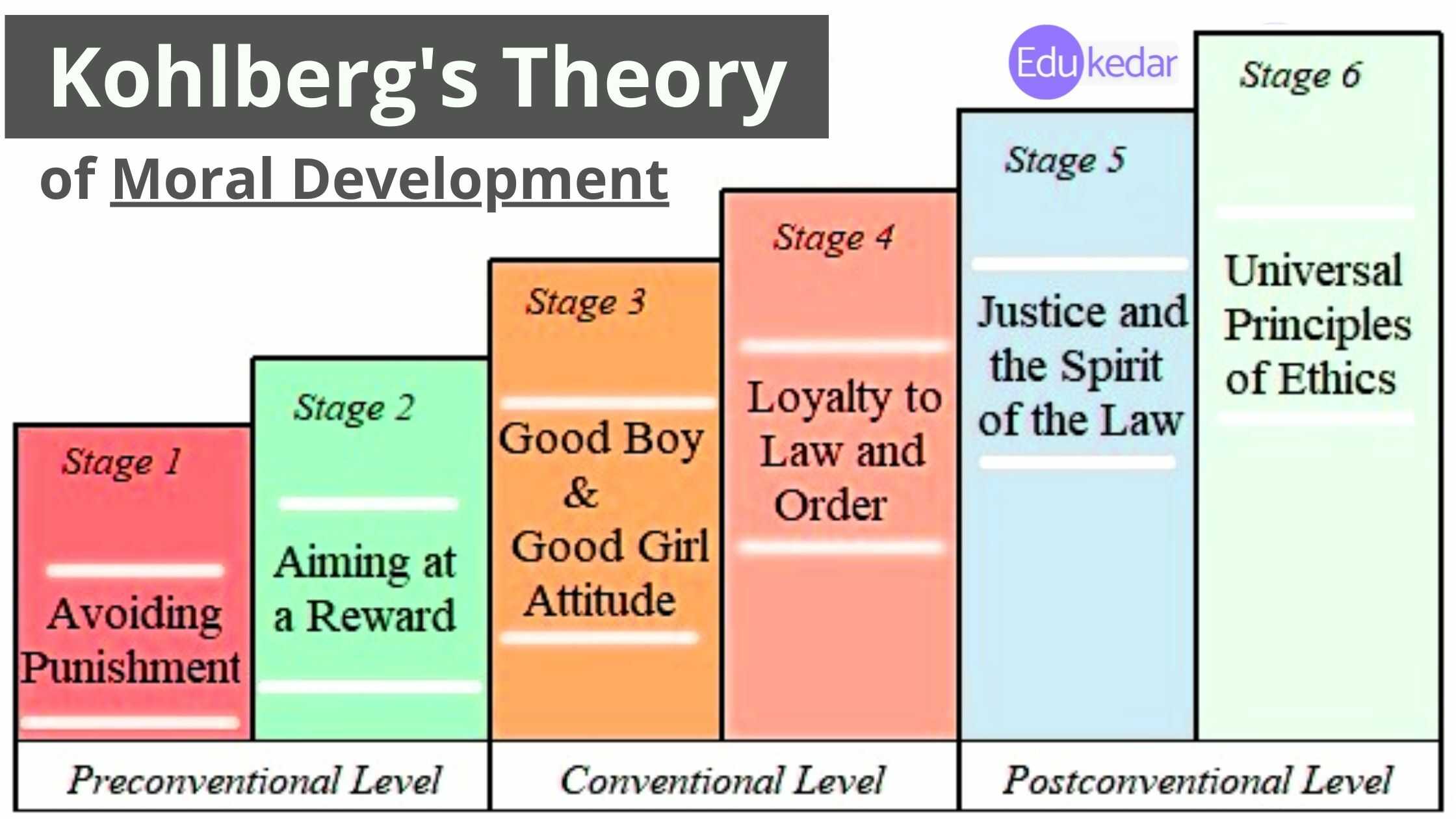


Lawrence Kohlberg Moral Development

Kohlberg’s theory of moral development is one of the most extensively researched and widely accepted theories of moral development. The theory is based on the idea that people progress through a series of six stages of moral development, each of which is associated with a different level of reasoning. Kohlberg’s theory has been used to explain the development of moral reasoning in children, adolescents, and adults.

The six stages of moral development are:

1.        Pre-Conventional Morality

2.      Conventional Morality

3.      Post-Conventional Morality

4.     Individualism

5.      Universalism

6.      Moral Principle

The six stages of moral development are:

1. Pre-Conventional Morality
2. Conventional Morality
3. Post-Conventional Morality
4. Individualistic Morality
5. Universalistic Morality


Stage 1: Pre-Conventional Morality

The first stage of moral development is Pre-Conventional Morality, which is characterized by a focus on the self and on obeying rules in order to avoid punishment or gain rewards. This stage is typically seen in children who are younger than 10 years old.


In this stage, children learn to obey rules in order to avoid punishment or gain rewards. The morality is based on external factors, such as what is legal or illegal, or what will get them in trouble or make them happy.

Stage 2: Conventional Morality

The second stage of moral development is Conventional Morality, which is characterized by a focus on the norms and expectations of the social group. This stage is typically seen in children who are 10 to 13 years old.

In this stage, children learn to conform to the expectations of others in order to be accepted and respected. The morality is based on societal norms and expectations.

Stage 3: Post-Conventional Morality

The third stage of moral development is Post-Conventional Morality, which is characterized by a focus on individual principles and values. This stage is typically seen in adolescents and adults.


In this stage, children learn to think for themselves and make their own decisions, based on their own values and principles. The morality is based on individual principles and ethics.


Graphic Designers Qualities

 Graphic designers need key qualities that will distinguish a great graphic designer.

Creativity

A great graphic designer must be imaginative and they must be able to apply that imagination into their work. Creative people don’t just follow the crowd and the latest trends, they find inspiration in everyday objects and even themselves.

Consistency

In graphic design, the word consistency often crops up, whether you are working with clients on a website design, creating posters or even flyers, it’s essential to keep your designs consistent following a brand’s identity. 

Using a brand’s colour scheme, styles and fonts should be considered during all aspects of creation. A great designer will be able to incorporate a brand’s identity into all new inspiring design ideas.


Problem solving

To become a great graphic designer, he must  know how to problem solve. A designer has to make things work, not only to create something brilliant but to know how their designs can work, whether that’s in a website’s development stage or knowing how to work with a client’s challenging expectations. 

A great graphic designer will not shy away from a challenge and will most likely discover new ideas and ask questions that most of us will overlook.


Always learning

Designing is a lifelong process. A great designer can often be described as humble and always embracing new ideas from others. As the graphic design industry evolves a great designer will be the one to keep up with latest trends.

Adobe Photoshop, Adobe InDesign, CorelDraw, Adobe Illustrator, Inkscape


Able to take criticism

 A great designer will take criticism positively, accept it is bound to happen then learn what works well and what doesn’t work. 

Not everyone will like everything you design, this isn’t because your design is bad, but because the client may have had a different vision in mind, criticism is something that shouldn’t be taken personally, it’s only another person’s opinion.

Patience

Designing great work can be time consuming, the best ideas often don’t come quickly and it can take numerous attempts for an idea to develop. A great designer has the patience to continue working on an idea that corresponds with the the clients needs. 

If the client keeps changing their mind, or coming up with different ideas after you have spent a long time making those ideas come to life, a great designer will be patient and give the client what they want (within a set timescale) because you know the end result will be worth it.


Wednesday, 2 November 2022

Erikson's eight stages of psychosocial development

Erikson explained eight stages of psychosocial development, from infancy to adulthood.  During each stage, the person experiences a psychosocial crisis which could have a positive or negative outcome for personality development. That means psychological needs of the individual conflicting with the needs of society .


Erikson's eight stages are:

·         Stage 1: Trust versus mistrust (birth to 1 year)

·         Stage 2: Autonomy versus shame and doubt (1 to 2 years)

·         Stage 3: Initiative versus guilt (3 to 5 years)

·         Stage 4: Industry versus inferiority (6 to 11 years)

·         Stage 5: Identity versus role confusion (12 to 18 years)

·         Stage 6: Intimacy versus isolation (19 to 40 years)

·         Stage 7: Generativity versus stagnation (41 to 64 years)

·         Stage 8: Integrity versus despair (65 years to death)


1. Trust vs. Mistrust

Trust vs. mistrust is the first stage in Erik Erikson's theory of psychosocial development. This stage begins at birth continues to approximately 18 months of age. During this stage, the infant is uncertain about the world in which they live, and looks towards their primary caregiver for stability and consistency of care.

If the care the infant receives is consistent, predictable and reliable, they will develop a sense of trust which will carry with them to other relationships, and they will be able to feel secure even when threatened.

If the care has been inconsistent, unpredictable and unreliable, then the infant may develop a sense of mistrust, suspicion, and anxiety. In this situation the infant will not have confidence in the world around them or in their abilities to influence events.


2. Autonomy vs. Shame and Doubt

Autonomy versus shame and doubt is the second stage of Erik Erikson's stages of psychosocial development. This stage occurs between the ages of 18 months to approximately 3 years. According to Erikson, children at this stage are focused on developing a sense of personal control over physical skills and a sense of independence. 


If children in this stage are encouraged and supported in their increased independence, they become more confident and secure in their own ability to survive in the world.

If children are criticized, overly controlled, or not given the opportunity to assert themselves, they begin to feel inadequate in their ability to survive, and may then become overly dependent upon others, lack self-esteem, and feel a sense of shame or doubt in their abilities.

3. Initiative vs. Guilt(3 to 5 years)

Initiative versus guilt is the third stage of Erik Erikson's theory of psychosocial development. During the initiative versus guilt stage, children assert themselves more frequently through directing play and other social interaction.

During this period the primary feature involves the child regularly interacting with other children at school. Central to this stage is play, as it provides children with the opportunity to explore their interpersonal skills through initiating activities. The children develop a sense of initiative and feel secure in their ability to lead others and make decisions.


4. Industry vs. Inferiority(6 to 11 years)

Erikson's fourth psychosocial crisis, involving industry (competence) vs. Inferiority occurs during childhood between the ages of five and twelve.

Children are at the stage where they will be learning to read and write, to do sums, to do things on their own. It is at this stage that the child’s peer group will gain greater significance and will become a major source of the child’s self-esteem. Some failure may be necessary so that the child can develop some modesty. Again, a balance between competence and modesty is necessary. Success in this stage will lead to the virtue of competence.


5. Identity vs. Role Confusion (12 to 18 years)

During this stage, adolescents search for a sense of self and personal identity, through an intense exploration of personal values, beliefs, and goals. During adolescence, the transition from childhood to adulthood is most important. Children are becoming more independent, and begin to look at the future in terms of career, relationships, families, housing, etc. The individual wants to belong to a society and fit in.This is a major stage of development where the child has to learn the roles he will occupy as an adult.

.

Erikson claims that the adolescent may feel uncomfortable about their body for a while until they can adapt and “grow into” the changes. Success in this stage will lead to the virtue of reliability. Fidelity involves being able to commit one's self to others on the basis of accepting others, even when there may be ideological differences.

6. Intimacy vs. Isolation(19 to 40 years)

Intimacy versus isolation is the sixth stage of Erik Erikson's theory of psychosocial development. This stage takes place during young adulthood between the ages of approximately 18 to 40 yrs. During this stage, the major conflict centers on forming intimate, loving relationships with other people.

During this stage, we begin to share ourselves more intimately with others. Successful completion of this stage can result in happy relationships and a sense of commitment, safety, and care within a relationship. Avoiding intimacy, fearing commitment and relationships can lead to isolation, loneliness, and sometimes depression. Success in this stage will lead to the virtue of love.

7. Generativity vs. Stagnation

 This stage takes place during during middle adulthood (ages 40 to 65 yrs).

Psychologically, generativity refers to "making your mark" on the world through creating or nurturing things that will outlast an individual. During middle age individuals experience a need to create or nurture things that will outlast them, often having mentees or creating positive changes that will benefit other people.


At this stage of life, individuals are pulled in all directions with work, family obligations, and children. Depending on their individual situation, they may be taking care of ailing or elderly parents, still raising children, or facing an empty nest. These are moments of great change and transformation. This stage of life can open doors to individuals’ sense of belonging and contribution to the next generation.”


8. Ego Integrity vs. Despair(65 years to death)

Ego integrity versus despair is the final stage of Erik Erikson’s stage theory of psychosocial development. This stage begins at approximately age 65 and ends at death. Individuals who reflect on their life and regret not achieving their goals will experience feelings of bitterness and despair.


As we grow older (65+ yrs) and become seniour citizens, we tend to slow down our productivity and explore life as a retired person.

Wise people are not characterized by a continuous state of ego integrity, but they experience both ego integrity and despair. Thus, late life is characterized by both integrity and despair as alternating states that need to be balanced.

Tuesday, 1 November 2022

Improve your personality

THE CONCEPT OF PERSONALITY- 


DEFINITION: “Personality is the unique  pattern of characteristic thoughts, feelings, and behaviours that distinguishes one person from another and that persists over time” 

According to Allport’s ‘personality is the dynamic organization within the individual.

It is a  product of both biology and environment, it remains fairly consistent throughout life

Different Dimensions   of Personality

The Big Five personality traits, also known as the five-factor model (FFM). These five factors are assumed to represent the basic structure behind all personality traits. 


They were defined and described by several different researchers during multiple periods of research. The "big five" are broad categories of personality traits. They were defined and described by several different researchers during multiple periods of research

1. Extraversion: This trait includes characteristics such as excitability, sociability, talkativeness, assertiveness and high amounts of emotional expressiveness.

 Extraversion is a measured by how energetic, sociable and friendly person. Extraverts are called as a ‘people’s person’ because they can know drawing energy from being around others directing their energies towards people and the outside world.

  1. Extroverts enjoy being around people and larger social groups. They are a happy in workplace environment, they are an efficient, team worker and even allowing space for others to cooperate.  
  2. Extroverts also enjoy talking a lot;

2. Agreeableness

Agreeableness is one of five dimensions of personality described as the Big FiveThis personality dimension includes attributes such as trust, altruism, kindness, affection, and other pro-social behaviors. Agreeableness is a personality trait that can be described as cooperative, polite, kind, and friendly. People high in this prosocial trait are particularly empathetic, showing great concern for the welfare of others, they are the first to help those in need. 


3. Conscientiousness:. Conscientiousness is a fundamental personality trait. Those people possess Conscientiousness personality trait; they are reflecting the tendency to be responsible, organized, hard-working, goal-directed, and to follow to norms and rules.

Common features of this dimension include high levels of thoughtfulness, with good impulse control and goal-directed behaviors, comprises self-control, industriousness, responsibility, and reliability.

 4. Neuroticism: Neuroticism, is typically defined as a tendency toward anxietydepression, self-doubt, and other negative feelings. Neuroticism is sometimes described as low emotional stability or negative emotionality. Some people are just much more neurotic than others. 

Some self-deprecating comedians and complainers wear their neuroticism as a badge of honor, but in truth, people with neurotic natures are more likely to to anxiety, mood disorders, and additional unfavorable social and emotional outcomes.

5. Openness: People who tend to be high in the trait of openness are more willing to embrace new things, new adventures, experiences, creative endeavors, fresh ideas, and novel experiences. They are open-minded and approach new things with curiosity and tend to seek out novelty. They are also very good at thinking about and making connections between different concepts and ideas.


PERSONALITY DEVELOPMENT:

Personality development includes activities that improve awareness and identity, develop talents and potential, build human capital and facilitate employability, enhance quality of life and contribute to the realization of dreams and aspirations.  It involves formal and informal activities that put people in the role of leaders, guides, teachers, and managers for helping them realize their full potential. Hence, it can be concluded that the process of improving or transforming the personality is called personality development.

 SIGNIFICANCE OR IMPORTANCE OF PERSONALITY DEVELOPMENT:

The scope of personality development is quite broad. It includes knowing how to dress well, social graces, grooming, speech and interpersonal skills.

The key benefits of developing your personality include the following:

 a. Confidence: Personality development gives more confidence to people.   When you know you are appropriately attired and groomed, this makes you less anxious when meeting a person. Knowing the right things to say and how to conduct yourself will increase your confidence.


b. Credibility: Personality development makes people more credible. Credibility is like trust, it takes a long time to build it and it can be lost in a moment. People want to believe in their leaders and have faith that they are the right people to follow. Personal and professional credibility is at the basis of this faith. Personal credibility consists of hon

c. Interaction: Personality development encourages people to interact with others. Social relationships are important ingredients of life. 

d. Leading and Motivating: Personality development enhances the capacity to lead and motivate. A person with a winning personality will be able to motivate better. People are less likely to get bored. 

e. Curiosity: A single wrong word can destroy human relationship. Knowing the right things to say shows both respect and intellectual sophistication. 

f. Communication skills:  Verbal communication skills are also part of personality development; improving your speech will strengthen the impact of your message. Most of the people you see as models of great personality have taken a lot of effort in developing their natural features.