Socrates

"The only true wisdom is in knowing you know nothing." 

Socrates

"To find yourself, think for yourself."

Nelson Mandela

"Education is the most powerful weapon which you can use to change the world."

Jim Rohn

"Success is nothing more than a few simple disciplines, practiced every day." 

Buddha

"The mind is everything. What you think, you become." 

Thursday, 17 March 2022

Radio- CHARACTERISTICS OF RADIO


Radio is an audio device of passing messages to a large audience. Radio involves the process by which messages are sent through electrical waves. In other words, the sound could be sent and received through these waves.

Meaning

 Radio as a word has its origin in the Latin.  The word Radio is defined as the process of sending and receiving messages through the air, using electromagnetic waves. It is also about the activity of broadcasting programmes for people to listen to the programmes being broadcast.


Radio involves the process by which messages are sent through electrical waves.

 Definition

It can also be defined as the broadcasting of programmes for the

public to listen to. It is the system of sending sound over a distance by

transmitting electrical signals.


Radio is one of the most important means of communication. Through radio, people send spoken words, music, and other communication signals through the air to any part of the world.


Radio broadcasts now feature music, news, discussion, interviews, description of sports events and advertising. People drive to their jobs listening to car radios and spend leisure hours hearing their favorite programs on radio.


Radio also has a wide variety of news in addition to broadcasting airplane pilots, astronauts, construction workers, policemen, sailors and others who do many kinds of jobs use radio for quick communication. Scientists send radio waves into the sky to learn about weather. Telephone companies send messages by radio as well as telephone.


FROM THIS SUBMISSION, RADIO HAS TWO CONCEPTS


(i)                It is a medium of transmitting messages by electronic signal to a scattered or receiving audience.

(ii)               It is a box which the receiver possesses and by which he or she traps the electronic signals through the antenna and receives a message.


CHARACTERISTICS OF RADIO


 As a medium of mass communication, radio has the following characteristics


Portability:

Radio is a very portable device that can be carried about with ease. The portability of radio makes it possible for people to listen to it wherever they are. With the coming of ICT, we now have radio sets that are as small as handsets.


(2) It is a mass medium:

Radio messages can reach people in different localities. Bittner (1989) says that the mass medium makes it possible for the message to reach beyond the immediate proximity of the sender. A mass medium has the ability to send a message globally.


(3) Transient messages: Radio messages are perishable. They are constantly on the move. The audience cannot ask for a repeat of what was not clearly heard because; the messages are on a move. That is why most people say radio does not talk twice.


(4) Audio medium: Radio is a one-sided medium that is it can only be heard and not be seen. This makes it a limited sensory; it only appeals to the sense of hearing. According to Asemah (2009), in radio words are the only thing used to create pictures in the minds of the audience. Other things like sound can also be used to create a mental picture in the mind of the listener.


(5) Cheap: Radio set is affordable. We have radio sets that are as cheap as N 500 naira.


(6) It requires talent: Radio operation requires talents to operate. It needs the blending of different talents in order to function well. It is not onesided in operations. It requires the reporters, sound engineers, etc, to operate.


(7) It is competitive: with the advent of many radio stations, it could be said that radio is a highly competitive business as it requires putting up catchy programmes in order to outshine other stations.

Monday, 28 February 2022

Elements of a Short Story


STORY

A story is basically a narrating of real or imaginary events, involving real or imaginary peopleA short story is a short work of fiction. Fiction, as you know, is prose writing about imagined events and characters. Prose writing differs from poetry in that it does not depend on verses, meters or rhymes for its organization and presentation. A story is generally designed to entertain, and/or send a message across.

The length of a written story will depend on the format, whether it is a novel, novella, short story etc. The length of a story has no bearing to its quality. 

Structure/Format of a Story

 There is a basic structure one can follow. It helps construct a story in an understandable manner and keeps the flow of the story.

Beginning: The beginning or the introduction of a story is of essential importance. This is the part where you can hook the reader and capture their attention. You must have come across some often-used beginnings to stories like, “Once upon a time” or “A long time ago”. However, you can get more creative and begin your story with intrigue.

Character Introduction: Your story will depend heavily on how well you introduce  your characters. To develop your characters, you can use dialogues as well. Also, do not include unnecessary secondary characters. Every character of the story must have a purpose.

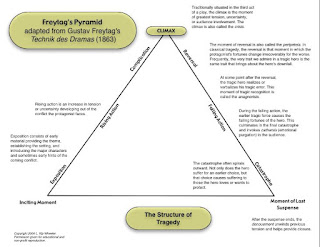
Plot: A plot is a series of events and character actions that relate to the central conflict.Here is where the actual narration of the story will happen. The events that occur or the description of the situation will be written in the plot. A plot must always have a conflict, which is the focus of any story.


Plot and Structure

The plot is the main sequence of events that make up the story. In short stories the plot is usually centered around one experience or significant moment. Consider the following questions:

  • What is the most important event?
  • How is the plot structured? Is it linear, chronological or does it move around?
  • Is the plot believable?

Climax/Conclusion: And this is where the story will come to its logical conclusion. If there is a plot twist, this is where you will include it. Always end your story in an interesting manner. Also, it is not necessary to give your story a definite ending.


American literature contains some of the world's best examples of the short story. Readers around the world enjoy the finely crafted stories of American writers such as O. Henry, Stephen Crane, Jack London, Mark Twain and Edgar Allen Poe.


What makes these authors such remarkable short story writers? They are true masters at combining the five key elements that go into every great short story: character, setting, conflict, plot and theme.

A character is a person, or sometimes even an animal, who takes part in the action of a short story or other literary work.

Characterization

Characterization deals with how the characters in the story are described. In short stories there are usually fewer characters compared to a novel. They usually focus on one central character or protagonist. Ask yourself the following:

  • Who is the main character?
  • Who or what is the antagonist?
  • Are the main character and other characters described through dialogue – by the way they speak (dialect or slang for instance)?
  • Has the author described the characters by physical appearance, thoughts and feelings, and interaction (the way they act towards others)?
  • Are they static characters who do not change?
  • Are they dynamic characters who change?
  • What type of characters are they? What qualities stand out? Are they stereotypes?
  • Are the characters believable?
  • Do the characters symbolize something?


Setting

Setting is a description of where and when the story takes place. . Authors often use descriptions of landscape, scenery, buildings, seasons or weather to provide a strong sense of setting.In a short story there are fewer settings compared to a novel. The time is more limited. Ask yourself the following questions:

  • How is the setting created? Consider geography, weather, time of day, social conditions, etc.
  • What role does setting play in the story? Is it an important part of the plot or theme? Or is it just a backdrop against which the action takes place?
  • Does the setting change? If so, how?
  • Study the time period, which is also part of the setting, and ask yourself the following:

    • When was the story written?
    • Does it take place in the present, the past, or the future?
    • How does the time period affect the language, atmosphere or social circumstances of the short stor


CONFLICT:  Conflict or tension is usually the heart of the short story and is related to the main character. In a short story there is usually one main struggle.The conflict is a struggle between two people or things in a short story. The main character is usually on one side of the central conflict.

On the other side, the main character may struggle against another important character, against the forces of nature, against society, or even against something inside himself or herself (feelings, emotions, illness).

  • How would you describe the main conflict?
  • Is it an internal conflict within the character?
  • Is it an external conflict caused by the surroundings or environment the main character finds himself/herself in?

CLIMAX:  The climax is the point of greatest tension or intensity in the short story. It can also be the point where events take a major turn as the story races towards its conclusion.

RESOLUTION:  The resolution is the end of the story. It focuses on how the conflict is ultimately resolved.

  • Are the closing sentences significant? How does the end relate or connect to the opening?

Narrator and Point of View

The narrator is the person telling the story.  Consider this question: Are the narrator and the main character the same?

By point of view we mean from whose eyes the story is being told. Short stories tend to be told through one character’s point of view. The following are important questions to consider:

  • Who is the narrator or speaker in the story?
  • Does the author speak through the main character?
  • Is the story written in the first person “I” point of view?
  • Is the story written in a detached third person “he/she” point of view?
  • Is there an “all-knowing” third person who can reveal what all the characters are thinking and doing at all times and in all places?
  • Is the narrator trustworthy?

Theme

The theme is built on a topic, such as death, hope, the American dream, etc. and how the topic affects the human condition, society, or life.  As a reader, focus on what the story is revealing about the topic.  The theme should be expressed as a statement, a general observation about human nature.The theme is the central idea or belief in a short story.

What a theme is NOT:

  • a word or phrase (topic or subject)
  • a command
  • a judgment

To help you construct the thematic statement, make a list of important images, topics, etc. found in the text.  Try to create a statement that includes the words in your list.


NOVELS

Novels are another example of fictional prose and are much longer than short stories.

NOVELLA

Some short stories, however, can be quite long. If a a short story is a long one, say fifty to one hundred pages, we call it a novella.


Work sheet

Source

Source

ernest-hemingway

Heming way style

hemingway tips

old-man-and-the-sea


Sunday, 27 February 2022

MEDIA WRITING SKILLS AND CHARACTERISTICS


KNOWLEDGE OF AP STYLE

Most media outlets use AP style—the style established and constantly updated by the Associated Press—as the foundation for basic news and media writing. AP style provides consistency in writing across media outlets and publications. The stylebook is available both online and in hard copy. In general, AP style has evolved to ensure that media writing is accurate, impartial, and clear to the audience.https://www.apstylebook.com/

KNOWLEDGE OF GRAMMAR AND PUNCTUATION

Media professionals need to hold  a high standard when it comes to knowledge of grammar and punctuation. here are a few basic grammar and punctuation rules:


Use simple sentences that follow the subject, verb, object order (example: Rama killed Ravana).
  • Use active, not passive voice. Active voice helps with clarity and concise writing. Understand word choice and meaning:
    • affect, effect
    • its, it’s
    • they’re, their, there
    • accept, except
    • நிலா, விலா,விழா,
    • கலை, களை,
    • பயன்பாடு,பயண்பாடு
    • குலம், குளம்,
    • பழம்,பலம்,
    • மலை,மழை,
  • Be aware of comma uses:
    1. Set off modifiers and Separate an introductory phrase or word, Before a conjunction, When writing a series of items (three or more).

ABILITY TO SIMPLIFY INFORMATION

As a media professional, you will need to synthesize and make sense of a great deal of information for our audience, often under a strict deadline. It is very essential to have a good storytelling skill, and the ability to focus on the essential information.


FOCUS ON ACCURACY AND DETAILS

When we write for the media, we represent not only our personal brand but also the broader organization for which you are producing content.

Precise writing and transparency give newsrooms credibility; misinformation can severely diminish the integrity of the media outlet.

There are types of accuracy

  1. Document accuracy refers to the proper coverage of our topics in appropriate detail. Often an accurate document needs to focus clearly on a problem. These writing tools help us to focus our writing effort .
  2. Stylistic accuracy concerns the careful use of language to express meaning.

Ø  Accurate language requires the careful use of paragraph and sentence structure and word choice to describe and analyze our topics effectively.

Ø  As a writer, you gain command of accuracy by studying the elements of style and by learning to apply those elements to our drafting, revising, editing, and proofreading.

Ø  Stylistic accuracy is also a matter of using words precisely.

3.      Technical accuracy requires stylistic accuracy but is not based solely on it. Technical accuracy depends on the writer's conceptual mastery of the subject and its vocabulary, as well as on his or her ability to analyze and shape data with a minimum of distortion.

WRITING OBJECTIVELY


The word objective refers to facts that are provable or verifiable.   Objective writing is writing that you can verify through evidence and facts. writing objectively means remain as neutral as possible through the use of facts, statistics, and research. This type of writing is best for  a writer need to present unbiased information to an audience and then let them determine their own opinion.

Objectivity is one of the principles of journalism, according to the code of ethics of the Society of Professional Journalists. Media writing should provide well-rounded analyses and stories that include all major perspectives.


Being objective means a journalist must concerned about facts and are not influenced by personal feelings or biases.


Try to consider both sides of an argument and avoid making value judgements by using words such as wonderful or appalling.


Techniques for making your writing more objective

Be clear in expressing your ideas:

several    10, most of the population    70%, some time ago    three years ago; or in 2006

Avoid intensifiers which can tend to exaggerate writing in an inaccurate , subjective way:

  • For example, awfully, very, really.

Balanced in your work, professional and believable:

  • Try to avoid making value judgements through use of words such as amazing or dreadful.

First vs. third person

  • First person: I, we, me, us
  • Second person: you
  • Third person: he, she, it, they, him, her, them

It is appropriate to use the first person (e.g. reflective writing). However, for other assignments the third person is preferred. Sometimes a mixture of the first and third person should be used for different purposes.


CLARITY

Media professionals generally write for a large, mainstream audience. Clear and concise writing makes it easier for a wide variety of groups to understand the core message. Complex sentence structures and jargon writing are not appropriate for diverse populations. Use simple sentences to get your point across.Clarity in writing means the ease with which a reader can understand you. It means avoiding unintended ambiguity or confusing sentence structure. 

 Clarity in writing refers to writing’s ability to convey:

  • Coherent, intelligible meaning , readers can understand the writing and what the author is trying to say, to a reasonable degree)
  • Sharpness of image or idea 

AVOID SUBJECTIVE WRITING

A subjective point of view is something based on one’s opinions, perspectives, beliefs, discoveries, desires, and feelings. It has no concern with right or wrong, other than the person’s opinion of what is right and wrong. Likewise, subjective writing or point of view is based on the writer’s own observation and experience. It focuses on the writer’s personal point of view and not built on facts that others see or things others go through.

Third person point of view can also be subjective. It is known as “limited omniscience,” in which a writer knows every detail about a character and sees the whole story through that character’s eyes.

Examples of subjective sources of information

  • Personal letters
  • Diaries
  • Blogs
  • Social media posts

Difference between Subjective and Objective

The major difference between subjective and objective is that subjective information is based on just one person’s feelings, assumptions, and opinions. It has a viewpoint of that person regardless of information or arguments it offers. Objective, on the other hand, is the information a writer or speaker provides outside of his/her personal opinions or feelings. It is based on facts.


Monday, 6 December 2021

Sound!

It is crucially important to human experience and to sound design in film.

Sound is important in a film production. Different aspects of sound enhance the characters and the story, making the movie a complete experience. In addition, sound is edited into the movie so it is coherent and comprehensible within the movie.

Some sort of sound is always used to enhance the movie experience. Sound in a movie includes 

  1. music, 
  2. dialogue, 
  3. sound effects, 
  4. ambient noise, and/or background noise and 
  5. soundtracks

Music

 Music is a very important element for a movie. In the silent movie period, music was played throughout the whole movie. The film score is the music at the beginning of the movie when the credits are rolling, and it sets the atmosphere for the movie.

Music is also played at critical points during a movie. It indicate  something is going to happen,  some situations have occurred in  a movie, 

Dialogue

Dialogue is defined as a conversation between two or more people in a movie. In addition, a movie could have a monologue where a character is speaking out loud when he or she is alone. A character, for example, may contemplate the pros and cons of talking some form of action in a monologue.

A movie can also have voice-over narration. Voice-over narration is when a character is explaining what has transpired in a movie and why. 100 years ago, there were silent movies with no audio dialogue, but dialogue cards were used, and background music set the tone of the scene. Take a look at the following example of a scene with and without dialogue.

Sound Effects

It defines sound effect as “any sound, other than music or speech, artificially reproduced to create an effect in a dramatic presentation, as the sound of a storm or a creaking door.” An action movie, for instance, is more interesting and bolder with sound effects. With sound effects, the viewer gets more involved with the movie.

Sound effects are most often added into the movie post production.  player. Music and sound effects give an aspect of the character.

Ambient Noises (Background Noise)

Ambient noises are background noises that are in a room, a house, outside, or any given location.  Every location has distinct and subtle sounds created by its environment. Ambient noises are types of sound effects. Background noise gives the movie more realism.


Soundtracks

A soundtrack is an audio recording created or used in film production or post-production.  Initially, the dialogue, sound effects, and music in a film have their own separate tracks (dialogue track, sound effects track, and music track), and these are mixed together to make what is called the composite track, which is heard in the film.

Late in the 1940s “sound track” became one word, “soundtrack.”  A soundtrack or an original soundtrack from a movie became a way of advertising the movie.