


Architecture
is not a modern phenomenon. It began as soon as the early cave man began to
build his own shelter to live in. Man first began to create and fix his own
shelter when he stepped out from the natural habitat of dense jungle covers.
Thus emerged architecture is a combination of needs, imagination, capacities of
the builders and capabilities of the workers.
Architectural
Forms and Construction Details:
Indian
Architecture evolved in various ages in different parts and regions of the
country. Naturally, the emergence and decay of great empires and dynasties
influenced the growth and shaped the evolution of Indian architecture. The art of sculpture began in India during
the Indus Valley civilization which encompassed parts of Afghanistan, Pakistan
and north-west India as far south as Rajkot. Excavations at Indus valley sites
at Mohenjo-daro and Harappa in modern-day Pakistan have uncovered a large
quantity of terracotta sculpture and, featuring images of female dancers, animals,
foliage and deities
HARAPPAN
PERIOD and Architecture
The excavations at Harappa and Mohenjodaro and
several other sites of the Indus Valley Civilisation revealed the existence of
a very modern urban civilisation with expert town planning and engineering
skills. The very advanced drainage system along with well planned roads and
houses show that a sophisticated and highly evolved culture existed in India
before the coming of the Aryans.
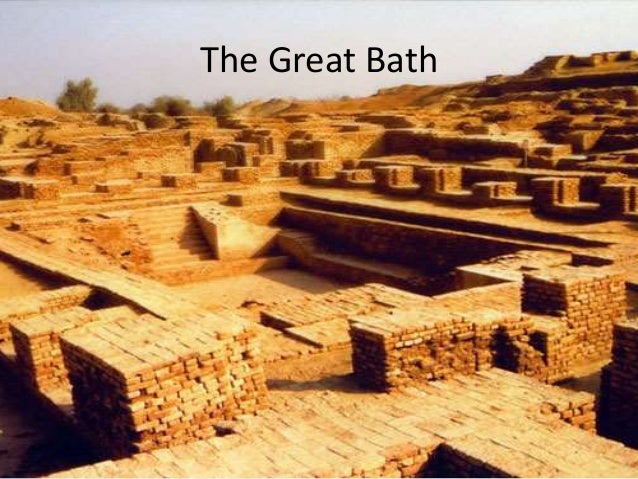
The Harappan people had constructed mainly
three types of buildings-
·
dwelling houses
·
pillared halls and
·
public baths.
Main features of Harappan remains are: 1.
·
All the sites consisted of walled
cities which provided security to the people.
·
The cities had a rectangular grid
pattern of layout with roads that cut each other at right angles.
·
The Indus Valley people used
standardised burnt mud-bricks as building material.
·
There is evidence of building of
big dimensions which were public buildings, administrative or business centres,
pillared halls and courtyards, There is no evidence of temples.
·
Public buildings include granaries
which were used to store grains which give an idea of an organised collection
and distribution system.
·
public bathing place shows the
importance of ritualistic bathing and cleanliness in this culture.
·
It is significant that most of the
houses had private wells and bathrooms.
The
world’s first bronze sculpture of a dancing girl has been found in Mohenjodaro.
The Vedic Aryans who came
next, lived in houses built of wood, bamboo and
reeds; the Aryan culture was largely a rural one. Aryans used perishable
material like wood for the construction of royal palaces which have been
completely destroyed over time.
The most important feature of the Vedic period was the making of fire altars
which soon became an important and integral part of the social and religious
life of the people even today.
Mauryan Sculpture: Pillars of
Ashoka (3rd Century BC)
The story of monumental stone
sculpture begins with the Maurya Dynasty, when sculptors first started to
carve illustrative scenes from India's three main religions - Hinduism, Jainism and Buddhism.
Jainism, a peace-loving
culture founded by Mahavira during the
6th century BC. Later, a third religious system called Buddhism appeared, based on the teachings of
Gautama Buddha (also known as Siddhartha Gautama, or Buddha), a sage who lived
and taught in eastern India during the 5th century BC.
One of the earliest Mauryan
patrons of the arts was Emperor Ashoka who decided to spread the Buddhist faith
through the construction of 85,000 stupas or dome-shaped monuments, decorated
with Buddhist writings and imagery engraved on rocks and pillars. The finest
example is probably the Great Stupa at Sanchi,
whose carved gateways depict a variety of Buddhist legends. It is believe that
Mauryan sculpture was influenced by Ancient
Persian Art . Other animal images used on the pillars, include bulls and elephants .
Located in a remote valley in the
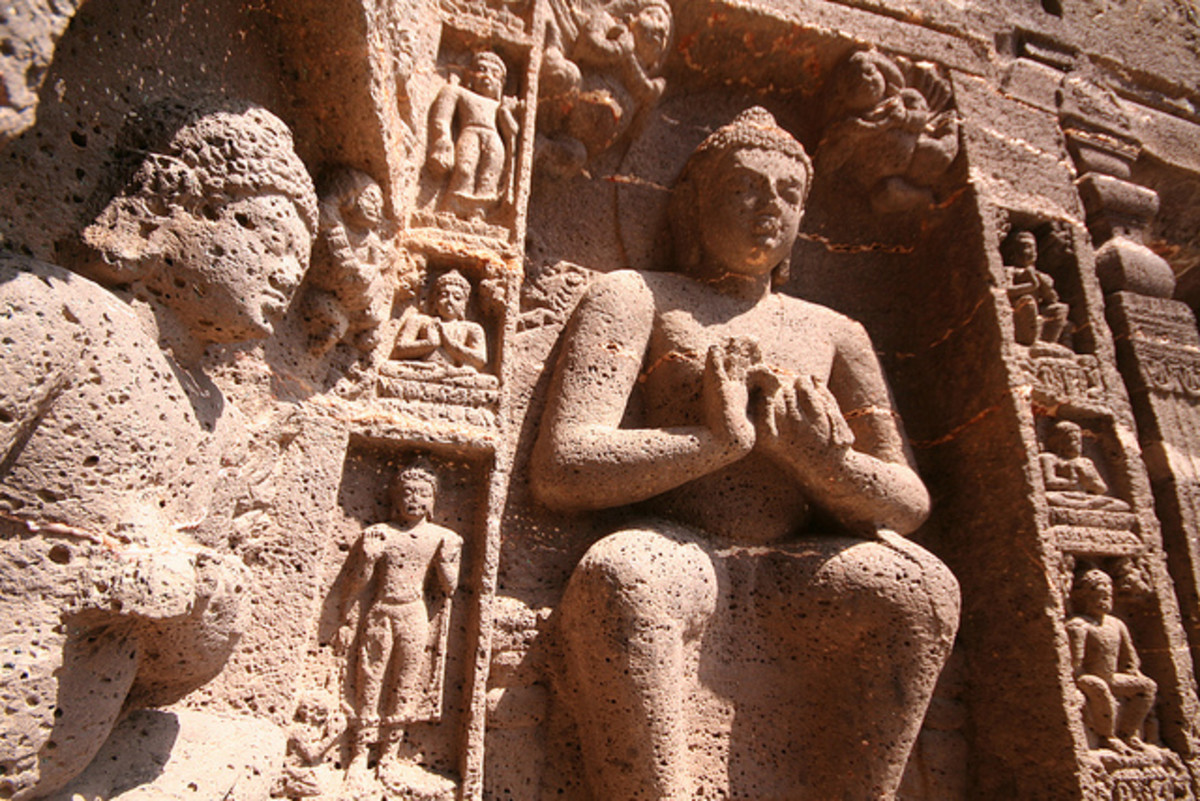
Aurangabad district of Maharashtra, Western India, the Ajanta Caves are world
famous for their cave
art - paintings and carvings illustrating the life of Buddha. There
are some 29 rock-cut caves in total, five of which were used as temples or
prayer halls, and twenty-four as monasteries.
The parietal
art at Ajanta includes some of the finest masterpieces of Buddhist
iconography in India. In addition to numerous serene statues of Buddha, the
Ajanta sculptures include intricate images of animals, warriors, and deities
while the paintings depict tales of
ancient courtly life and Buddhist legend. The Ajanta Caves were gradually
forgotten until 1819, when they were accidentally rediscovered by a British
officer during a tiger-hunt. Since 1983,
the Ajanta Caves have been a UNESCO World Heritage Site.
Next two distinctive schools of Buddhist visual art emerged during the Kushan Empire in eastern Afghanistan, Pakistan and north-western India,
during the 1st century CE.
The first, known as the Gandhara school (flourished 1st-5th century), was centered around Peshawar. The Gandhara school was noted for its
Greco-Roman style of Buddhist sculpture, partly due to the conquests of
Alexander the Great in the region and the resulting legacy of Hellenistic
art (c.323-30 BCE), as well as the active trade between the territory
and Rome. Borrowing heavily from classical Greek
sculpture as well as Roman
sculpture, Gandharan artists depicted Buddha
with a youthful Apollo-like face, complete with Roman nose, dressed in
toga-style garments like those seen on Roman imperial statues. The most common material used by Gandharan
sculptors was dark grey or green phyllite, grey-blue mica schist, or
terracotta. Their significance lies in the fact that they gave Buddha a human
figure.
The second, located south of New Delhi in Uttar Pradesh, was the Mathura
school (flourished 1st–6th century). In contrast, the Mathuran school is
associated with native Indian traditions that emphasized rounded or voluptuous
bodies adorned with minimal clothing, typically carved out of mottled red
sandstone from local quarries.
Emergence
of Buddhism and Jainism helped in the development of early architectural style.The Buddhist Stupas were built at
places where Buddha’s remains were preserved and at the major sites where
important events in Buddha’s life took place.
·
- STUPAS were built of huge mounds of mud, enclosed in carefully burnt small standard bricks. One was built at his birthplace Lumbini
- the second at GAYA where he attained enlightenment under the Bodhi Tree,
- the third at SARNATH where he gave his first sermon
- and the fourth at KUSHINAGAR where he passed away attaining Mahaparinirvana at the age of eighty.
- Buddha’s burial mounds and places of major events in his life became important landmarks of the significant architectural buildings in the country. These became important sites for Buddha’s order of monks and nuns - the sangha. While Buddhists and Jains began to build STUPAS, VIHARAS AND CHAITYAS, the first temple building activity started during the Gupta rule.
Characteristics of Jain sculpture
Practiced in India since the 6th century BCE, Jainism is a religion that advocates non-violence towards all living things, along with an austere lifestyle. The word "Jainism" comes from from jina (meaning liberator or conqueror), the name given to the 24 main adepts and teachers of this faith. Also known as also known as tirthankaras (river-forders), these 24 individuals are the principal focus of Jain sculpture. The highest form of life in Jainism is the wandering, possessionless, and passionless ascetic, which is why jinas are typically portrayed in statues or reliefs as itinerant beggars or yogis. Invariably they are depicted in only two positions: either sitting in the lotus posture (padmasana) or upright in the Jain body-abandonment posture (kayotsarga).
Practiced in India since the 6th century BCE, Jainism is a religion that advocates non-violence towards all living things, along with an austere lifestyle. The word "Jainism" comes from from jina (meaning liberator or conqueror), the name given to the 24 main adepts and teachers of this faith. Also known as also known as tirthankaras (river-forders), these 24 individuals are the principal focus of Jain sculpture. The highest form of life in Jainism is the wandering, possessionless, and passionless ascetic, which is why jinas are typically portrayed in statues or reliefs as itinerant beggars or yogis. Invariably they are depicted in only two positions: either sitting in the lotus posture (padmasana) or upright in the Jain body-abandonment posture (kayotsarga).
Hindu Sculpture of the Gupta
Empire (flourished 320-550)
The Gupta era is often referred to as the Classical or Golden Age of India, and
was characterized by extensive inventions and enormous progress in technology,
engineering, literature, mathematics, astronomy and philosophy, that laid the
basis for what is generally termed Hindu culture. During this period, Hinduism became the official religion of the Gupta
Empire, which saw the emergence of countless images of popular Hindu deities
such as Vishnu, Shiva, Krishna and the goddess Durga. But the period was
also a time of relative religious tolerance: Buddhism also received royal
attention, while Jainism also prospered. In fact, thanks to the influence of
the Mathura school, the Gupta era is associated with the creation of the iconic
Buddha image, which was then copied throughout the Buddhist world. The Gupta
style of sculpture remained relatively uniform across the empire.. The most
innovative and influential artistic centres included Sarnath and Mathura. The Gupta idiom spread across much of India,
influencing artists for centuries afterward. It also spread via the trade
routes to Thailand and Java, as well as other countries in South and Southeast
Asia.
An important phase of Indian
architecture began with the Mauryan period.
In the Mauryan period
(322-182 BC) especially under Ashoka architecture
saw a great advancement. Mauryan art and architecture depicted the influence of Persians and Greeks.
During the reign of Ashoka many monolithic stone pillars were erected on which
teachings of ‘Dhamma’ were inscribed. The highly polished pillars with animal
figures adorning the top (capitals) are unique and remarkable. The lion capital
of the Sarnath pillar has been accepted as the emblem of the Indian Republic.
Each pillar weighs about 50 tonnes and is about 50 ft high. The stupas of Sanchi and Sarnath are
symbols of the achievement of Mauryan architechture.
The blending of Greek and Indian art led to
the development of GANDHARA ART
which developed later. The other schools of art and architecture were the
indigenous Mathura school and Amaravati school. A large number of statues of
the Buddha were built by the artisans of these schools specially after first
century AD under the influence of the Kushanas.
Under
the GANDHARA SCHOOL of art life-like statues of Buddha and Bodhisattavas were
made in the likeness of Greek gods even, though the ideas, inspirations and
subjects were all Indian. Rich ornaments, costumes drapery were used to impart
physical beauty. The sculptures were in stone, terracotta, cement like material
and clay.
Cave architecture
The development of cave architecture is another
unique feature and marks an important phase in the history of Indian
architecture. More than thousand caves have been excavated between SECOND CENTURY BC AND TENTH CENTURY AD.
Famous among these were
AJANTA
AND ELLORA CAVES OF MAHARASHTRA, and
UDAYGIRI
CAVE of Orissa. These are Buddhist viharas, chaityas as well as mandapas and
pillared temples of Hindu gods and goddesses.
THEKAILASH
TEMPLE AT ELLORA built by the Rashtrakutas and
the
RATHA TEMPLES OF MAHABALIPURAM built by the Pallavas are other examples of
rock-cut temples. In southern India the Pallavas,
Cholas, Pandyas, Hoyshalas, Later the Rulers Of The Vijaynagar kingdom were
great builders of temples.
The
PALLAVA rulers built the shore temple at Mahabalipuram.
Pallavas also built other structural
temples like KAILASHNATH TEMPLE AND VAIKUNTHA PERUMAL TEMPLES at Kanchipuram.
Pallava
and Pandya Sculpture from South India (600-900)
 Nearly all the sculpture created
in southern India during the 7th, 8th and 9th centuries, is associated with the
Pallavas or the Pandyas - the two most important Hindu dynasties of the time.
Pallava rule was centered on the eastern coastline and included the city of
Mamallapuram, in the Kancheepuram district of Tamil Nadu, which was famous for being
the site of the carved-stone cliff created by Pallava kings in the 7th century.
The Pallava era is significant for marking the transition from rock-cut architecture to stone temples.
Its best-known achievements include the Kailasanatha
temple in Kanchipuram (685-705) noted for its huge pillars ornamented with
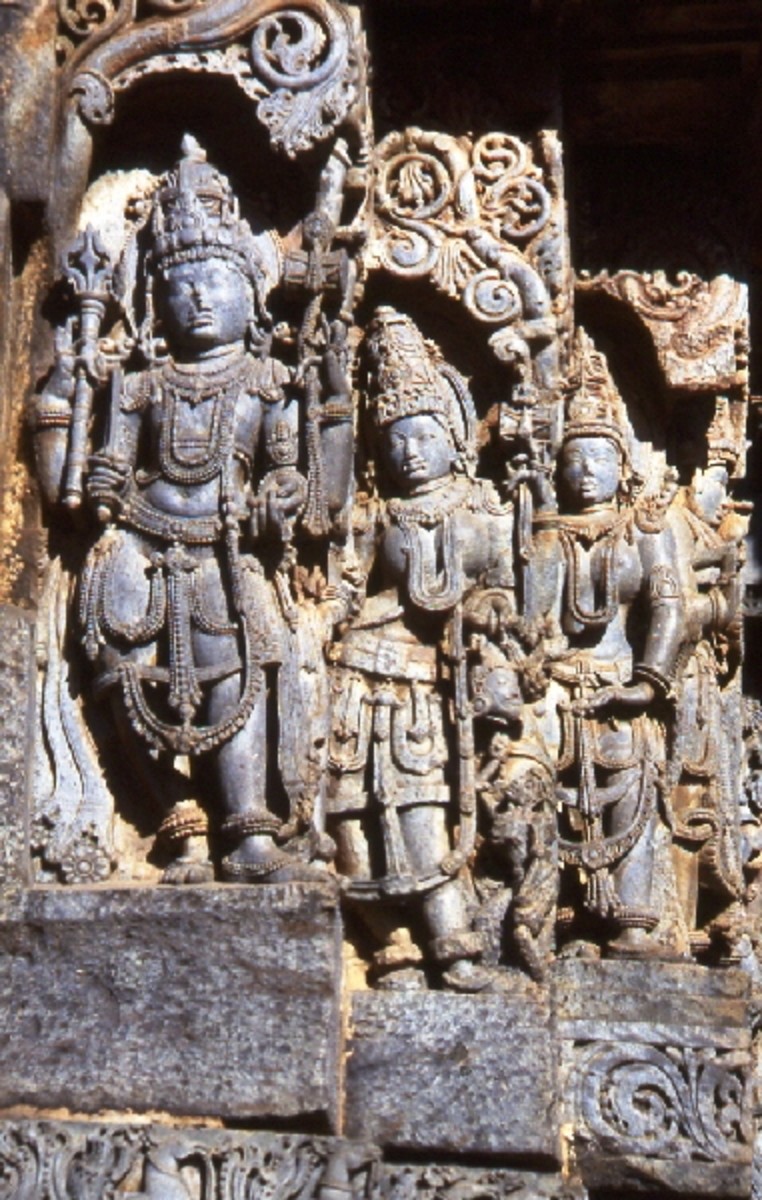
multi-directional carvings of lions, and the Shore Temple at Mahabalipuram (7th century), overlooking the Bay of
Bengal, which was decorated with copious stone statues and reliefs of Vishnu,
Shiva, Krishna and other Hindu deities.
Nearly all the sculpture created
in southern India during the 7th, 8th and 9th centuries, is associated with the
Pallavas or the Pandyas - the two most important Hindu dynasties of the time.
Pallava rule was centered on the eastern coastline and included the city of
Mamallapuram, in the Kancheepuram district of Tamil Nadu, which was famous for being
the site of the carved-stone cliff created by Pallava kings in the 7th century.
The Pallava era is significant for marking the transition from rock-cut architecture to stone temples.
Its best-known achievements include the Kailasanatha
temple in Kanchipuram (685-705) noted for its huge pillars ornamented with
multi-directional carvings of lions, and the Shore Temple at Mahabalipuram (7th century), overlooking the Bay of
Bengal, which was decorated with copious stone statues and reliefs of Vishnu,
Shiva, Krishna and other Hindu deities.
The Pandya dynasty, based further
south in the vicinity of Madurai, Tamil Nadu, ruled parts of South India from
600 BCE to first half of the 14th century CE. Like the Pallavas, the Pandyas
were famous for their rock-cut architecture and sculpture. The latter is
exemplified by the granite statue of a Seated four-armed Vishnu (770-820), now
in the Metropolitan
Museum of Art, New York.
Chola Bronze Sculpture of South
India, Sri Lanka (9th-13th
century)
From the late 9th century to the
late 13th century the Chola dynasty ruled much of south India, Sri Lanka and
the Maldive Islands from their base near Thanjavur on the southeastern coast.
Chola kings were active patrons of the arts, and during their reign they built
a number of large stone temple complexes decorated throughout with stone
carvings of Hindu deities. However, Chola art is best-known for its temple bronze
sculpture of Hindu gods and goddesses, many of which were designed to be
carried in local processions during temple festivals. Cast using the lost-wax
method, Chola bronzes were admired for their sensuous figures as well as the
detail of their clothing and jewellery. It is worth remembering that when these
images were worshipped in the temple or during processional events, they were
lavishly adorned with silk cloth, garlands, and jewels. The Chola style of
sculpture was greatly admired for its elegance and grace, but especially for
its vitality - an attribute conveyed through facial expression, posture and
movement. Even though bronze sculpture was well established in south India
before the Cholas, a much greater number of bronze statues were created during
the Chola period. Chola Hindu sculpture features countless figures of Shiva,
often accompanied by his consort Parvati; Vishnu and his consort Lakshmi; the
Nayanmars, other Saiva saints and many other Hindu divinities. The CHOLAS built many temples most famous
being the BRIHADESHWARA TEMPLE AT TANJORE. The Cholas developed a typical style
of temple architecture of south india called THE DRAVIDA STYLE, complete with
Vimana Or Shikhara, high walls and the gateway topped by gopuram.
MUGHALS
From 1526 until 1857, much of
northern India was ruled by the Mughals, Islamic rulers from Central Asia.
During this era, the principal artistic activity was painting, while metalwork, and ivory
carving as well as marble
sculpturealso flourished..
The Mughal Emperor Akbar was an
enthusiastic patron of stone carving. He commissioned statues of Jai
Mal and Fatha (Rajput heroes of Chittor) shown sitting on elephants, to
guard the gate of the Agra Fort.
Emperor Jahangir erected two life-size
marble statues of Rana Amar Singh and his
son Karan Singh in the palace garden at Agra.
In general, Mughal rulers were
great admirers of relief
sculpture (including abstract work as well as naturalist depictions of
flowers, butterflies, insects and clouds) which was regarded as an essential
element of Mughal architecture, and embellished their buildings with a wide
variety of this type of decorative
art: an example being the 50 varieties of marble carving on the walls
of Akbar's tomb at Sikandra
The
first building of this rule was HUMAYUN’S
TOMB at Delhi. In this magnificent building red stone was used. It has a
main gateway and the tomb is placed in the midst of a garden. Akbar built forts
at Agra and Fatehpur Sikri.
The
tomb of Salim Chishti, Palace of Jodha Bai, Ibadat Khana, Birbal’s House and
other buildings at Fatehpur Sikri reflect a synthesis of Persian and Indian
elements Fatehpur Sikri is a romance of
stones.. During the reign of Jehangir, Akbar’s Mausoleum was constructed at
Sikandra near Agra. He built the beautiful tomb of Itimad-ud-daula which was
built entirely of marble.
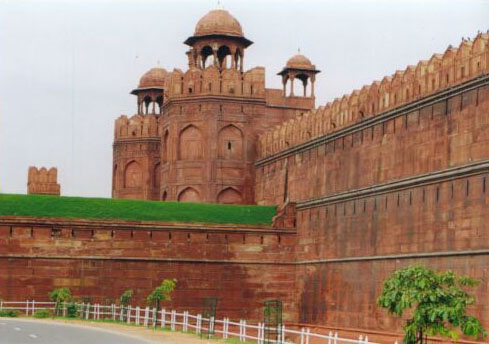
Shahjahan
was the greatest builder amongst the Mughals. The Red Fort and Jama Masjid of
Delhi and above all the Taj Mahal are some of the buildings built by Shahjahan.
The Taj Mahal, the tomb of Shahjahan’s wife, is built in marble and reflects
all the architectural features that were developed during the Mughal period..
The Mughal style of architecture had a profound influence on the buildings of
the later period. The buildings showed a strong influence of the ancient Indian
style and had courtyards and pillars. For the first time in the architecture of
this style living beings- elephants, lions, peacocks and other birds were
sculptured in the brackets
COLONIAL
ARCHITECTURE AND THE MODERN PERIOD
 The colonial influence can be seen in office
buildings. Europeans who started coming from sixteenth century AD constructed
many churches and other buildings. Portuguese built many churches at Goa, the
most famous of these are BASILICA BOM JESUS and the CHRUCH OF SAINT FRANCIS. The
British also built administrative and residential buildings which reflect their
imperial(royal) glory. Some GREEK AND ROMAN INFLUENCE can be
observed in the pillared buildings.
The colonial influence can be seen in office
buildings. Europeans who started coming from sixteenth century AD constructed
many churches and other buildings. Portuguese built many churches at Goa, the
most famous of these are BASILICA BOM JESUS and the CHRUCH OF SAINT FRANCIS. The
British also built administrative and residential buildings which reflect their
imperial(royal) glory. Some GREEK AND ROMAN INFLUENCE can be
observed in the pillared buildings. 




 Posts
Posts


